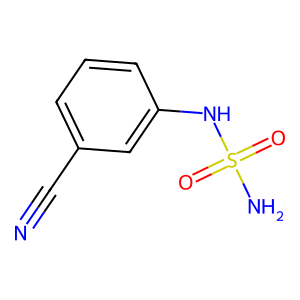
n-(3-Cyanophenyl)aminosulfonamide
Names and Identifiers of n-(3-Cyanophenyl)aminosulfonamide
CAS Number |
1000932-12-6 |
|---|---|
MDL Number |
MFCD09863348 |
IUPAC Name |
N-(3-cyanophenyl)aminosulfonamide |
InChI |
InChI=1S/C7H7N3O2S/c8-5-6-2-1-3-7(4-6)10-13(9,11)12/h1-4,10H,(H2,9,11,12) |
InChIKey |
LUTLSZGLFSAVND-UHFFFAOYSA-N |
Canonical SMILES |
N#CC1=CC=CC(NS(N)(=O)=O)=C1 |
UNSPSC Code |
12352100 |
Physical and chemical properties of n-(3-Cyanophenyl)aminosulfonamide
H Bond Acceptors |
3 |
|---|---|
H Bond Donors |
2 |
LogP |
-0.253573214666667 |
Molecular Formula |
C7H7N3O2S |
Molecular Weight |
197.22 |
Safety Information of n-(3-Cyanophenyl)aminosulfonamide

Applications of n-(3-Cyanophenyl)aminosulfonamide
N-(3-cyanophenyl)sulfamide has diverse applications:
- Medicinal Chemistry: It is explored as a potential therapeutic agent due to its enzyme inhibition properties.
- Biochemistry: Utilized in proteomics research as a biochemical tool for studying protein interactions and functions.
- Material Science: Its unique structural features make it suitable for developing new materials with specific properties.
Interaction Studies of n-(3-Cyanophenyl)aminosulfonamide
Studies on N-(3-cyanophenyl)sulfamide have focused on its interactions with various biological targets. These interactions often involve binding to enzymes or receptors, leading to modulation of their activity. The compound's ability to disrupt critical biochemical pathways suggests its potential use in therapeutic contexts, particularly in treating diseases linked to enzyme dysfunctions.
Biological Activity of n-(3-Cyanophenyl)aminosulfonamide
N-(3-cyanophenyl)sulfamide has been studied for its biological activities, particularly in relation to enzyme inhibition. It acts as a competitive inhibitor for certain enzymes, disrupting biochemical pathways crucial for cellular functions. For instance, it has shown potential in inhibiting carbonic anhydrase, which plays a vital role in regulating pH and fluid balance in biological systems. Additionally, derivatives of sulfonamides are known for their antimicrobial and anticancer properties, making this compound a candidate for further pharmacological studies.