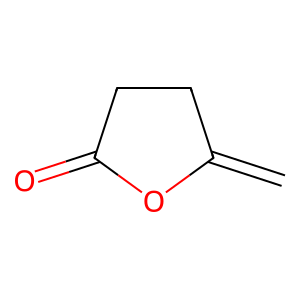
gamma-Methylene-gamma-butyrolactone
Names and Identifiers of gamma-Methylene-gamma-butyrolactone
CAS Number |
10008-73-8 |
|---|---|
EC Number |
233-004-8 |
MDL Number |
MFCD00042762 |
IUPAC Name |
5-methylideneoxolan-2-one |
InChI |
InChI=1S/C5H6O2/c1-4-2-3-5(6)7-4/h1-3H2 |
InChIKey |
SIFBVNDLLGPEKT-UHFFFAOYSA-N |
Canonical SMILES |
C=C1CCC(=O)O1 |
UNII |
B6FM50XSNZ |
UNSPSC Code |
12352100 |
Physical and chemical properties of gamma-Methylene-gamma-butyrolactone
Boiling Point |
186.7ºC at 760 mmHg ,80ºC17 mm Hg(lit.) |
|---|---|
BRN |
1560870 |
Density |
1.07 g/cm3 |
Exact Mass |
98.03680 |
Flash Point |
76.7ºC |
H Bond Acceptors |
1 |
H Bond Donors |
0 |
Index of Refraction |
n20/D 1.466(lit.) |
LogP |
0.83710 |
Melting Point |
18ºC |
Merck |
14,647 |
Molecular Formula |
C5H6O2 |
Molecular Weight |
98.09990 |
PSA |
26.30000 |
Vapour Pressure |
0.654mmHg at 25°C |
Safety Information of gamma-Methylene-gamma-butyrolactone


Applications of gamma-Methylene-gamma-butyrolactone
Gamma-methylene-gamma-butyrolactone finds applications in various fields:
- Polymer Chemistry: It is used as a comonomer in synthesizing responsive polymers such as poly(N-vinyl caprolactam) copolymers, which exhibit pH-dependent behavior.
- Pharmaceuticals: Due to its conversion to gamma-hydroxybutyric acid, it has potential uses in therapeutic formulations targeting CNS disorders.
- Biodegradable Materials: Its ability to form polyesters makes it suitable for developing environmentally friendly materials.
Interaction Studies of gamma-Methylene-gamma-butyrolactone
Research has highlighted the interactions of gamma-methylene-gamma-butyrolactone with various biological systems. Notably, its conversion into gamma-hydroxybutyric acid emphasizes its role in modulating CNS activity. Additionally, studies have explored its anti-inflammatory properties and potential therapeutic effects against arthritis, indicating its broader implications in medicinal chemistry.
Biological Activity of gamma-Methylene-gamma-butyrolactone
Gamma-methylene-gamma-butyrolactone exhibits various biological activities, primarily due to its structural similarity to gamma-hydroxybutyric acid. It acts as a prodrug, converting into gamma-hydroxybutyric acid in vivo, which functions as a central nervous system depressant. Studies have indicated potential anti-arthritic properties and other therapeutic effects when used in specific formulations.
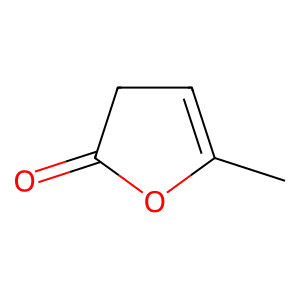 Cas:591-12-8

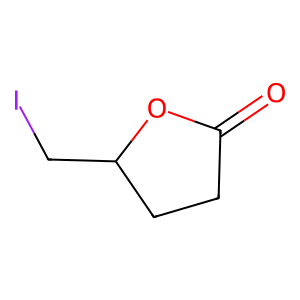 Cas:1729-32-4

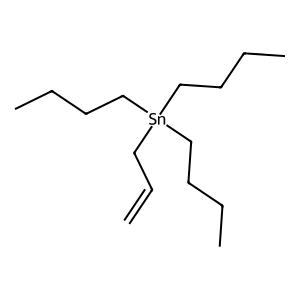 Cas:24850-33-7