
Propanamide, 3,3'-dithiobis[n-methyl-
CAS No.:
999-72-4
M. Wt:
236.35500
M. Fa:
C8H16N2O2S2
InChI Key:
QUHFFYTTZGTUQQ-UHFFFAOYSA-N
Appearance:
White/Off-White Solid
Names and Identifiers of Propanamide, 3,3'-dithiobis[n-methyl-
CAS Number |
999-72-4 |
|---|---|
EC Number |
213-665-9 |
IUPAC Name |
N-methyl-3-[[3-(methylamino)-3-oxopropyl]disulfanyl]propanamide |
InChI |
InChI=1S/C8H16N2O2S2/c1-9-7(11)3-5-13-14-6-4-8(12)10-2/h3-6H2,1-2H3,(H,9,11)(H,10,12) |
InChIKey |
QUHFFYTTZGTUQQ-UHFFFAOYSA-N |
Canonical SMILES |
CNC(=O)CCSSCCC(=O)NC |
UNII |
F5OV03L720 |
UNSPSC Code |
12352100 |
Physical and chemical properties of Propanamide, 3,3'-dithiobis[n-methyl-
Acidity coefficient |
15.60±0.46(Predicted) |
|---|---|
Boiling Point |
510.7ºC at 760mmHg |
Density |
1.179 |
Exact Mass |
236.06500 |
Flash Point |
262.6ºC |
H Bond Acceptors |
2 |
H Bond Donors |
2 |
Index of Refraction |
1.534 |
LogP |
1.42180 |
Melting Point |
111-112 °C |
Molecular Formula |
C8H16N2O2S2 |
Molecular Weight |
236.35500 |
PSA |
108.80000 |
Solubility |
DMSO (Slightly), Methanol (Slightly) |
Storage condition |
Refrigerator |
Safety Information of Propanamide, 3,3'-dithiobis[n-methyl-

Applications of Propanamide, 3,3'-dithiobis[n-methyl-
Propanamide, 3,3'-dithiobis[n-methyl-] has several applications across different fields:
- Pharmaceutical Research: Its potential antimicrobial and antioxidant properties make it a candidate for drug development.
- Chemical Synthesis: Used as an intermediate in synthesizing other complex organic molecules.
- Biochemical Studies: It serves as a probe in studies investigating cellular mechanisms and interactions due to its ability to modify biological systems.
Interaction Studies of Propanamide, 3,3'-dithiobis[n-methyl-
Studies on interaction mechanisms involving propanamide, 3,3'-dithiobis[n-methyl-] have focused on its binding affinity with various biomolecules. These interactions are crucial for understanding its biological activity:
- Protein Binding: Research indicates that this compound can bind to specific proteins involved in oxidative stress response pathways.
- Enzyme Inhibition: There is evidence suggesting that propanamide derivatives may inhibit certain enzymes associated with microbial growth.
These findings underscore the importance of further research into its pharmacological potential and mechanisms of action.
Biological Activity of Propanamide, 3,3'-dithiobis[n-methyl-
Research indicates that propanamide, 3,3'-dithiobis[n-methyl-] exhibits various biological activities. Its unique structure allows it to interact with biological systems in several ways:
- Antioxidant Properties: The dithiobis moiety may contribute to its ability to scavenge free radicals, potentially protecting cells from oxidative stress.
- Antimicrobial Activity: Some studies suggest that this compound may possess antimicrobial properties, making it a candidate for further investigation in pharmaceutical applications.
- Cellular Interaction: Preliminary studies indicate that propanamide derivatives can influence cell signaling pathways, although detailed mechanisms remain under investigation.
Physical sample testing spectrum (NMR) of Propanamide, 3,3'-dithiobis[n-methyl-

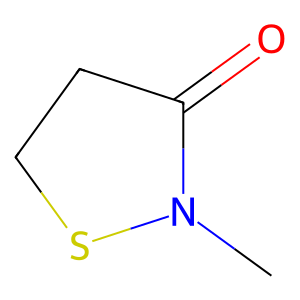 Cas:1003-22-1

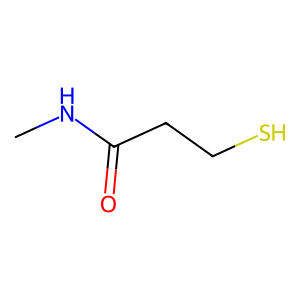 Cas:52334-99-3

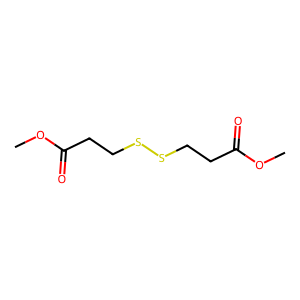 Cas:15441-06-2
 Cas:74-89-5