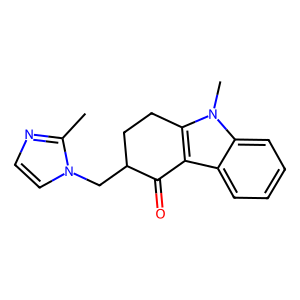
Ondansetron
Names and Identifiers of Ondansetron
CAS Number |
99614-02-5 |
|---|---|
EC Number |
619-449-4 |
IUPAC Name |
9-methyl-3-[(2-methylimidazol-1-yl)methyl]-2,3-dihydro-1H-carbazol-4-one |
InChI |
InChI=1S/C18H19N3O/c1-12-19-9-10-21(12)11-13-7-8-16-17(18(13)22)14-5-3-4-6-15(14)20(16)2/h3-6,9-10,13H,7-8,11H2,1-2H3 |
InChIKey |
FELGMEQIXOGIFQ-UHFFFAOYSA-N |
Canonical SMILES |
CC1=NC=CN1CC2CCC3=C(C2=O)C4=CC=CC=C4N3C |
UNII |
4AF302ESOS |
Physical and chemical properties of Ondansetron
Acidity coefficient |
pKa 7.4 (Uncertain) |
|---|---|
Boiling Point |
546.0±30.0 °C at 760 mmHg |
Density |
1.3±0.1 g/cm3 |
Exact Mass |
293.152802 |
Flash Point |
284.0±24.6 °C |
Index of Refraction |
1.678 |
LogP |
log Kow = 3.95 (est) |
Melting Point |
231 - 232 °C |
Molecular Formula |
C18H19N3O |
Molecular Weight |
293.363 |
PSA |
39.82000 |
Stability |
Stable under recommended storage conditions. /Ondansetron hydrochloride dihydrate/ |
Storage condition |
−20°C |
Vapour Pressure |
3.7X10⁻¹⁰ mm Hg at 25 °C (est) |
Water Solubility |
H2O: >5 mg/mL |
Solubility of Ondansetron
| Solvent | Dissolution Behavior | Temperature Effect | pH Effect |
|---|---|---|---|
| Water | Slightly soluble | Solubility increases slightly with rising temperature | Higher solubility under acidic conditions (e.g., pH 1.2); solubility decreases under basic conditions (may precipitate) |
| 0.1M Hydrochloric Acid | Freely soluble | Dissolution rate increases with temperature | Low pH environment favors dissolution; hydrochloric acid provides acidic conditions |
| Buffer Solution (pH 6.8) | Sparingly to slightly soluble | Minimal effect from temperature increase | Lower solubility at neutral pH; precipitation may occur |
| Ethanol | Freely soluble | Increased temperature promotes dissolution | Minimal pH effect, as ethanol is an organic solvent |
| Methanol | Freely soluble | Dissolution accelerates with rising temperature | pH effect not significant |
| Chloroform | Practically insoluble | Almost no effect | Insoluble in chloroform, regardless of pH |
| DMSO (Dimethyl sulfoxide) | Very easily dissolved | Rapidly dissolves at room temperature | Little pH influence; DMSO is a highly polar solvent favorable for dissolution |
Safety Information of Ondansetron


Key Milestone of Ondansetron
| Year | Milestone Event | Detailed Description |
|---|---|---|
| 1979 | Initiation of Compound Research | Glaxo (now GSK) in the UK began research on 5-HT₃ receptor antagonists, aiming to develop new antiemetic drugs. |
| 1984 | First Synthesis of Ondansetron | Scientists discovered and synthesized ondansetron (code name GR 38032F) during the screening process, which demonstrated high selectivity and potent antagonistic effects on 5-HT₃ receptors. |
| 1987 | First Human Clinical Trial | Ondansetron entered Phase I clinical trials to evaluate its safety, tolerability, and pharmacokinetic properties, with results indicating good safety. |
| 1989 | Approval for Marketing in the UK | The UK Medicines and Healthcare products Regulatory Agency (MHRA) approved ondansetron for the prevention of chemotherapy-induced nausea and vomiting (CINV), under the brand name Zofran®. |
| 1991 | Approval by the U.S. FDA | The U.S. Food and Drug Administration (FDA) approved ondansetron for the prevention of nausea and vomiting caused by highly emetogenic chemotherapy. |
| 1993 | Expanded Indication: Postoperative Nausea and Vomiting (PONV) | The FDA approved ondansetron for the prevention of postoperative nausea and vomiting in adults, expanding its clinical application. |
| 1997 | Pediatric Indication Approved | The FDA approved ondansetron for the prevention of chemotherapy-induced nausea and vomiting in children, making it the first 5-HT₃ receptor antagonist approved for this indication. |
| 1999 | Launch of Oral Formulations | Oral tablets and liquid formulations were introduced, improving patient convenience, especially for outpatient and long-term treatment. |
| 2006 | Withdrawal of Certain High-Dose IV Regimens | The FDA issued a safety warning recommending against the use of a single 32 mg high-dose intravenous regimen due to the risk of QT prolongation and increased arrhythmia risk. |
| 2010 | Development of New Formulations: ODT, Patches, etc. | New formulations such as orally disintegrating tablets (ODT) and transdermal patches were developed, further enhancing patient compliance and usage flexibility. |
| 2012 | Patent Expiry and Widespread Availability of Generics | Core patents for ondansetron expired, leading multiple manufacturers to launch generic versions, significantly reducing treatment costs and improving accessibility. |
| 2018-Present | Ongoing Off-Label Use Research | Research continues in areas such as hyperemesis gravidarum, radiation-induced vomiting, and gastrointestinal disorders, with some national guidelines incorporating recommendations for its use. |
Applications of Ondansetron
Ondansetron is primarily used in clinical settings for:
- Prevention of chemotherapy-induced nausea and vomiting.
- Prevention of postoperative nausea and vomiting.
- Management of nausea associated with radiation therapy.
It may also be employed off-label for other conditions as deemed appropriate by healthcare providers.
Interaction Studies of Ondansetron
Ondansetron interacts with several other medications primarily through cytochrome P450 enzyme pathways. Notably:
- CYP1A2: Plays a significant role in the metabolism of ondansetron.
- CYP2D6: Has a minor role; variations in this enzyme can affect ondansetron clearance.
- CYP3A4: Important at higher concentrations of ondansetron.
These interactions can influence drug efficacy and safety profiles, particularly in patients taking multiple medications.
Biological Activity of Ondansetron
The primary mechanism of action for ondansetron involves antagonism of the 5-HT3 receptors located in both the central nervous system and peripheral nervous system. By blocking these receptors, ondansetron effectively inhibits the vomiting reflex triggered by serotonin release in response to chemotherapeutic agents. The drug exhibits both central and peripheral effects; central effects are mediated through the chemoreceptor trigger zone in the medulla oblongata while peripheral effects occur via vagal afferents in the gastrointestinal tract.
PharmacodynamicsOndansetron has a high selectivity for 5-HT3 receptors compared to dopamine receptors, which contributes to its efficacy as an antiemetic agent. Common side effects include headache, constipation, diarrhea, and dizziness, while serious side effects may involve QT prolongation and allergic reactions.
Physical sample testing spectrum (NMR) of Ondansetron

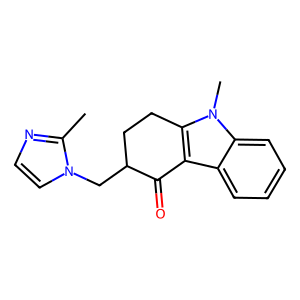 Cas:99614-01-4

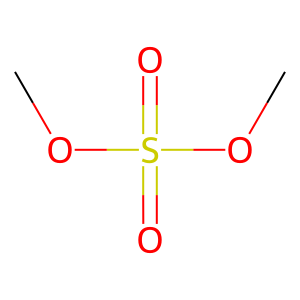 Cas:77-78-1

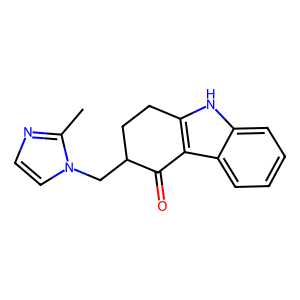 Cas:99614-14-9
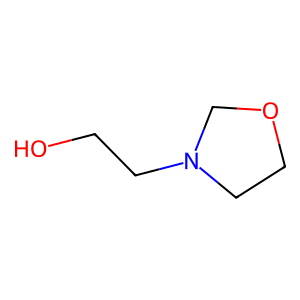 Cas:20073-50-1
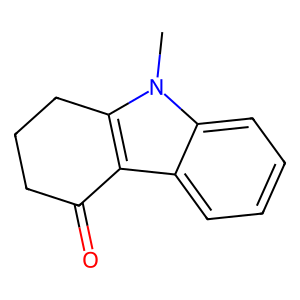 Cas:27387-31-1
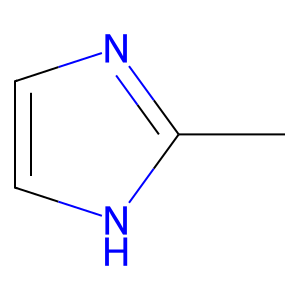 Cas:693-98-1
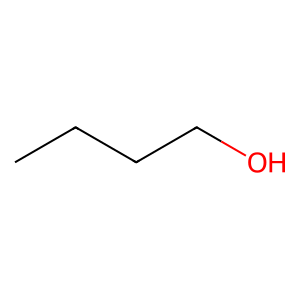 Cas:71-36-3