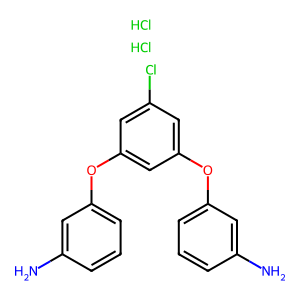
1,3-Bis(3-aminophenoxy)-5-chlorobenzene Dihydrochloride
CAS No.:
99503-73-8
M. Wt:
399.69900
M. Fa:
C18H17Cl3N2O2
InChI Key:
YZUFDVOYHZOIGU-UHFFFAOYSA-N
Appearance:
White to Almost white powder to crystal
Names and Identifiers of 99503-73-8
CAS Number |
99503-73-8 |
|---|---|
IUPAC Name |
3-[3-(3-aminophenoxy)-5-chlorophenoxy]aniline;dihydrochloride |
InChI |
InChI=1S/C18H15ClN2O2.2ClH/c19-12-7-17(22-15-5-1-3-13(20)9-15)11-18(8-12)23-16-6-2-4-14(21)10-16;;/h1-11H,20-21H2;2*1H |
InChIKey |
YZUFDVOYHZOIGU-UHFFFAOYSA-N |
Canonical SMILES |
C1=CC(=CC(=C1)OC2=CC(=CC(=C2)Cl)OC3=CC=CC(=C3)N)N.Cl.Cl |
Physical and chemical properties of 99503-73-8
Exact Mass |
398.03600 |
|---|---|
LogP |
7.85540 |
Molecular Formula |
C18H17Cl3N2O2 |
Molecular Weight |
399.69900 |
PSA |
70.50000 |
Applications of 99503-73-8
1,3-Bis(3-aminophenoxy)-5-chlorobenzene dihydrochloride finds applications in various fields:
- Research: Used as a biochemical reagent in proteomics and molecular biology studies.
- Pharmaceutical Development: Investigated for potential therapeutic uses due to its biological activity.
- Chemical Synthesis: Acts as an intermediate for synthesizing more complex organic compounds.
Interaction Studies of 99503-73-8
Studies on the interactions of 1,3-bis(3-aminophenoxy)-5-chlorobenzene dihydrochloride with biological systems have highlighted:
- Protein Binding: Research indicates that this compound may bind to specific proteins, influencing their function and stability.
- Cellular Uptake: Investigations into how this compound is taken up by cells can provide insights into its mechanism of action and potential therapeutic effects.
Biological Activity of 99503-73-8
1,3-Bis(3-aminophenoxy)-5-chlorobenzene dihydrochloride has been studied for its potential biological activities, particularly in proteomics research. It may exhibit:
- Antimicrobial Properties: Similar compounds have shown effectiveness against various bacterial strains.
- Anticancer Activity: Preliminary studies suggest potential applications in cancer treatment due to its ability to interact with specific cellular targets.
- Enzyme Inhibition: The compound may inhibit certain enzymes, impacting metabolic pathways in organisms.
Physical sample testing spectrum (NMR) of 99503-73-8
