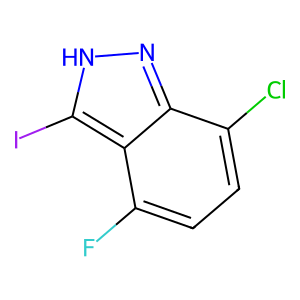
7-Chloro-4-fluoro-3-iodo-1H-indazole
CAS No.:
1000342-09-5
M. Wt:
296.468
M. Fa:
C7H3ClFIN2
InChI Key:
QHODPGTVJUGODH-UHFFFAOYSA-N
Names and Identifiers of 7-Chloro-4-fluoro-3-iodo-1H-indazole
CAS Number |
1000342-09-5 |
|---|---|
IUPAC Name |
7-chloro-4-fluoro-3-iodo-2H-indazole |
InChI |
InChI=1S/C7H3ClFIN2/c8-3-1-2-4(9)5-6(3)11-12-7(5)10/h1-2H,(H,11,12) |
InChIKey |
QHODPGTVJUGODH-UHFFFAOYSA-N |
Canonical SMILES |
C1=C(C2=C(NN=C2C(=C1)Cl)I)F |
Physical and chemical properties of 7-Chloro-4-fluoro-3-iodo-1H-indazole
Boiling Point |
393.1±37.0 °C at 760 mmHg |
|---|---|
Density |
2.2±0.1 g/cm3 |
Exact Mass |
295.901337 |
Flash Point |
191.6±26.5 °C |
Index of Refraction |
1.752 |
LogP |
3.75 |
Molecular Formula |
C7H3ClFIN2 |
Molecular Weight |
296.468 |
PSA |
28.68000 |
Vapour Pressure |
0.0±0.9 mmHg at 25°C |
Applications of 7-Chloro-4-fluoro-3-iodo-1H-indazole
The applications of 7-chloro-4-fluoro-3-iodo-1H-indazole extend across various fields:
- Pharmaceutical Development: Its structural features make it a candidate for drug development targeting various diseases.
- Material Science: The compound may also find applications in developing new materials due to its unique electronic properties.
Interaction Studies of 7-Chloro-4-fluoro-3-iodo-1H-indazole
Studies focusing on the interactions of 7-chloro-4-fluoro-3-iodo-1H-indazole with biological targets are crucial for understanding its mechanism of action. Key areas include:
- Protein Binding Studies: Understanding how this compound interacts with proteins can provide insights into its biological activity.
- Receptor Binding Assays: Evaluating binding affinities to specific receptors can help identify potential therapeutic uses.
Biological Activity of 7-Chloro-4-fluoro-3-iodo-1H-indazole
Indazole derivatives, including 7-chloro-4-fluoro-3-iodo-1H-indazole, have been studied for their potential pharmacological activities. Research indicates that such compounds may exhibit:
- Anticancer Properties: Some indazole derivatives have shown promise in inhibiting cancer cell proliferation.
- Antimicrobial Activity: There are indications that these compounds may possess antibacterial and antifungal properties.
- Neuroprotective Effects: Certain studies suggest potential benefits in neurodegenerative disease models.