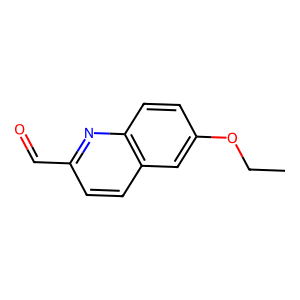
6-Ethoxyquinoline-2-carbaldehyde
CAS No.:
100063-12-5
M. Wt:
201.22100
M. Fa:
C12H11NO2
InChI Key:
WRZJIHGBMXGHAJ-UHFFFAOYSA-N
Names and Identifiers of 6-Ethoxyquinoline-2-carbaldehyde
CAS Number |
100063-12-5 |
|---|---|
MDL Number |
MFCD06824183 |
IUPAC Name |
6-ethoxyquinoline-2-carbaldehyde |
InChI |
InChI=1S/C12H11NO2/c1-2-15-11-5-6-12-9(7-11)3-4-10(8-14)13-12/h3-8H,2H2,1H3 |
InChIKey |
WRZJIHGBMXGHAJ-UHFFFAOYSA-N |
Canonical SMILES |
CCOC1=CC2=C(C=C1)N=C(C=C2)C=O |
UNSPSC Code |
12352100 |
Physical and chemical properties of 6-Ethoxyquinoline-2-carbaldehyde
Boiling Point |
363.8ºC at 760 mmHg |
|---|---|
Density |
1.191g/cm3 |
Exact Mass |
201.07900 |
Flash Point |
173.8ºC |
Index of Refraction |
1.631 |
LogP |
2.44600 |
Molecular Formula |
C12H11NO2 |
Molecular Weight |
201.22100 |
PSA |
39.19000 |
Vapour Pressure |
1.75E-05mmHg at 25°C |
Safety Information of 6-Ethoxyquinoline-2-carbaldehyde

Applications of 6-Ethoxyquinoline-2-carbaldehyde
6-Ethoxyquinoline-2-carbaldehyde has several applications:
- Pharmaceuticals: It serves as a precursor for synthesizing various pharmaceutical agents due to its biological activity.
- Dyes and Pigments: The compound can be utilized in dye manufacturing owing to its chromophoric properties.
- Research: It is used in chemical research for studying reaction mechanisms and developing new synthetic methodologies.
Interaction Studies of 6-Ethoxyquinoline-2-carbaldehyde
Interaction studies involving 6-ethoxyquinoline-2-carbaldehyde often focus on its binding affinity with biological targets. These studies are crucial for understanding its mechanism of action and potential therapeutic applications. For instance:
- Enzyme Binding Studies: Investigating how the compound interacts with specific enzymes can reveal insights into its inhibitory effects.
- Receptor Binding Assays: Such assays help determine the affinity of the compound for various receptors, aiding in drug development efforts.
These studies are essential for assessing the pharmacological potential of the compound.
Biological Activity of 6-Ethoxyquinoline-2-carbaldehyde
Research indicates that compounds related to 6-ethoxyquinoline-2-carbaldehyde exhibit various biological activities. These may include:
- Antimicrobial Properties: Some quinoline derivatives have demonstrated activity against bacteria and fungi.
- Anticancer Activity: Certain analogs have shown promise in inhibiting cancer cell proliferation, potentially through mechanisms involving apoptosis induction.
- Enzyme Inhibition: Quinoline derivatives can act as inhibitors for specific enzymes, which may be useful in drug design.
The biological potential of 6-ethoxyquinoline-2-carbaldehyde is an area of ongoing research.