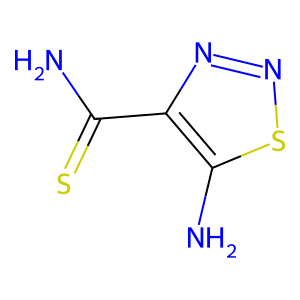
5-aminothiadiazole-4-carbothioamide
Names and Identifiers of 5-aminothiadiazole-4-carbothioamide
CAS Number |
100097-66-3 |
|---|---|
IUPAC Name |
5-azanyl-1,2,3-thiadiazole-4-carbothioamide |
Canonical SMILES |
C1(=C(SN=N1)N)C(=S)N |
Physical and chemical properties of 5-aminothiadiazole-4-carbothioamide
Exact Mass |
159.98800 |
|---|---|
LogP |
1.03600 |
Molecular Formula |
C3H4N4S2 |
Molecular Weight |
160.22100 |
PSA |
138.15000 |
Safety Information of 5-aminothiadiazole-4-carbothioamide

Applications of 5-aminothiadiazole-4-carbothioamide
1,2,3-Thiadiazole-4-carbothioamide, 5-amino- has potential applications across various fields:
- Pharmaceutical Development: Due to its biological activity, it may serve as a lead compound in drug discovery for antimicrobial or anticancer agents.
- Agricultural Chemicals: Its properties could be explored for developing new pesticides or fungicides.
- Material Science: The unique structure may lend itself to applications in creating novel materials with specific electronic or optical properties.
Interaction Studies of 5-aminothiadiazole-4-carbothioamide
Interaction studies involving 1,2,3-thiadiazole-4-carbothioamide, 5-amino- focus on its binding affinity with biological targets such as enzymes or receptors. Preliminary studies suggest that the compound may interact effectively with certain proteins involved in disease pathways. Further research is needed to elucidate these interactions and their implications for therapeutic applications.
Biological Activity of 5-aminothiadiazole-4-carbothioamide
Research indicates that compounds similar to 1,2,3-thiadiazole-4-carbothioamide, 5-amino- exhibit significant biological activities. Some potential activities include:
- Antimicrobial Properties: Thiadiazole derivatives have been studied for their ability to inhibit bacterial growth and show antifungal activity.
- Anticancer Activity: Certain thiadiazole compounds have demonstrated cytotoxic effects against various cancer cell lines.
- Anti-inflammatory Effects: Thiadiazoles may also possess anti-inflammatory properties, making them candidates for therapeutic development.
The specific biological activity of 1,2,3-thiadiazole-4-carbothioamide, 5-amino- requires further investigation to establish its efficacy and mechanisms of action.
 Cas:6944-34-9
