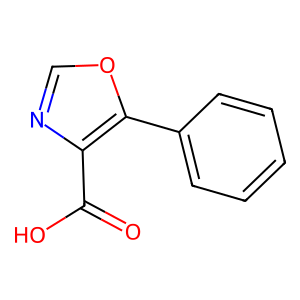
5-Phenyl-1,3-oxazole-4-carboxylic acid
Names and Identifiers of 5-Phenyl-1,3-oxazole-4-carboxylic acid
CAS Number |
99924-18-2 |
|---|---|
EC Number |
680-489-0 |
MDL Number |
MFCD00105447 |
IUPAC Name |
5-phenyl-1,3-oxazole-4-carboxylic acid |
InChI |
InChI=1S/C10H7NO3/c12-10(13)8-9(14-6-11-8)7-4-2-1-3-5-7/h1-6H,(H,12,13) |
InChIKey |
RUKDIKJSGDVSIF-UHFFFAOYSA-N |
Canonical SMILES |
C1=CC=C(C=C1)C2=C(N=CO2)C(=O)O |
UNSPSC Code |
12352100 |
Physical and chemical properties of 5-Phenyl-1,3-oxazole-4-carboxylic acid
Boiling Point |
354.7±22.0 °C at 760 mmHg |
|---|---|
Density |
1.3±0.1 g/cm3 |
Exact Mass |
189.042587 |
Flash Point |
168.3±22.3 °C |
Index of Refraction |
1.587 |
LogP |
0.90 |
Melting Point |
181ºC |
Molecular Formula |
C10H7NO3 |
Molecular Weight |
189.167 |
PSA |
63.33000 |
Storage condition |
2-8°C |
Vapour Pressure |
0.0±0.8 mmHg at 25°C |
Safety Information of 5-Phenyl-1,3-oxazole-4-carboxylic acid

Applications of 5-Phenyl-1,3-oxazole-4-carboxylic acid
5-Phenyl-1,3-oxazole-4-carboxylic acid finds applications in various domains:
- Pharmaceuticals: Due to its potential biological activities, it serves as a lead compound for developing new drugs targeting infections or inflammatory diseases.
- Agrochemicals: The compound may also be explored for use as a pesticide or herbicide due to its structural properties that could influence biological systems in plants or pests.
- Material Science: Its unique chemical structure may lend itself to applications in developing novel materials or polymers with specific properties.
Interaction Studies of 5-Phenyl-1,3-oxazole-4-carboxylic acid
Studies on interaction profiles of 5-Phenyl-1,3-oxazole-4-carboxylic acid reveal its potential interactions with various biological molecules. These interactions are crucial for understanding its mechanism of action:
- Protein Binding: Investigations into how this compound binds to proteins can provide insights into its pharmacokinetics and efficacy in biological systems.
- Receptor Interaction: Understanding how it interacts with specific receptors can elucidate its biological effects and therapeutic potential.
These studies are essential for advancing the compound's development into practical applications.
Biological Activity of 5-Phenyl-1,3-oxazole-4-carboxylic acid
Research indicates that 5-Phenyl-1,3-oxazole-4-carboxylic acid exhibits biological activity that may include antimicrobial and anti-inflammatory properties. Its structure allows it to interact with biological targets, making it a candidate for further investigation in drug development. Studies have shown that derivatives of this compound may possess selective activity against certain pathogens or inflammatory pathways, although detailed mechanisms remain to be elucidated.
Physical sample testing spectrum (NMR) of 5-Phenyl-1,3-oxazole-4-carboxylic acid

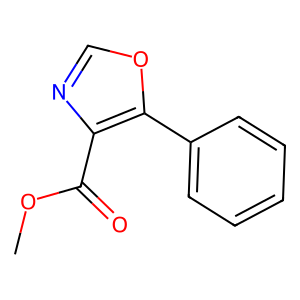 Cas:38061-18-6

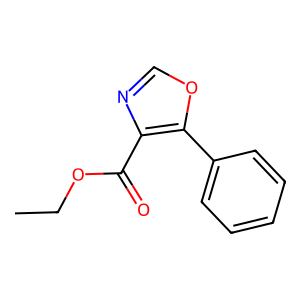 Cas:32998-97-3