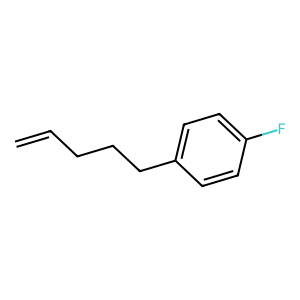
5-(4-Fluorophenyl)-1-pentene
Names and Identifiers of 5-(4-Fluorophenyl)-1-pentene
CAS Number |
100074-04-2 |
|---|---|
MDL Number |
MFCD11553774 |
IUPAC Name |
1-fluoro-4-pent-4-enylbenzene |
InChI |
InChI=1S/C11H13F/c1-2-3-4-5-10-6-8-11(12)9-7-10/h2,6-9H,1,3-5H2 |
InChIKey |
LPTVTPWQJMZABF-UHFFFAOYSA-N |
Canonical SMILES |
C=CCCCC1=CC=C(C=C1)F |
UNSPSC Code |
12352100 |
Physical and chemical properties of 5-(4-Fluorophenyl)-1-pentene
Exact Mass |
164.10000 |
|---|---|
LogP |
3.33440 |
Molecular Formula |
C11H13F |
Molecular Weight |
164.21900 |
Safety Information of 5-(4-Fluorophenyl)-1-pentene

Applications of 5-(4-Fluorophenyl)-1-pentene
5-(4-Fluorophenyl)-1-pentene has several notable applications:
- Medicinal Chemistry: It serves as a building block for synthesizing pharmaceutical compounds, particularly those targeting neurological disorders.
- Materials Science: The compound is utilized in developing advanced materials with specific electronic properties due to its unique structural characteristics.
- Biological Studies: Researchers use it to investigate the effects of fluorinated compounds on biological systems, including enzyme interactions and metabolic pathways.
Interaction Studies of 5-(4-Fluorophenyl)-1-pentene
Studies on 5-(4-Fluorophenyl)-1-pentene have demonstrated its potential interactions with various biological targets. The presence of the fluorine atom significantly influences its reactivity and binding properties, enhancing its efficacy in medicinal applications. Investigations into its mechanism of action reveal that it may modulate enzyme activity or receptor signaling, leading to therapeutic effects.
Biological Activity of 5-(4-Fluorophenyl)-1-pentene
The biological activity of 5-(4-Fluorophenyl)-1-pentene is largely attributed to its structural characteristics. The fluorine atom enhances its binding affinity to biological targets, which may include enzymes and receptors. This property makes it a valuable compound in medicinal chemistry, particularly in developing drugs targeting neurological disorders and other conditions. Research indicates that fluorinated compounds can exhibit unique interactions within biological systems, influencing enzyme kinetics and receptor signaling pathways.