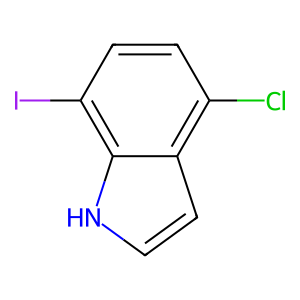
4-chloro-7-iodo-1H-indole
Names and Identifiers of 4-chloro-7-iodo-1H-indole
CAS Number |
1000341-82-1 |
|---|---|
IUPAC Name |
4-chloranyl-7-iodanyl-1H-indole |
Canonical SMILES |
C1=CC(=C2C(=C1Cl)C=CN2)I |
Physical and chemical properties of 4-chloro-7-iodo-1H-indole
Boiling Point |
370.2±22.0 °C at 760 mmHg |
|---|---|
Density |
2.0±0.1 g/cm3 |
Exact Mass |
276.915497 |
Flash Point |
177.7±22.3 °C |
Index of Refraction |
1.767 |
LogP |
3.70 |
Molecular Formula |
C8H5ClIN |
Molecular Weight |
277.490 |
PSA |
15.79000 |
Vapour Pressure |
0.0±0.8 mmHg at 25°C |
Applications of 4-chloro-7-iodo-1H-indole
4-chloro-7-iodo-1H-indole has several applications in medicinal chemistry and organic synthesis:
- Pharmaceutical Development: Its unique structure makes it a candidate for developing new drugs targeting specific diseases.
- Biological Research: The compound is useful in studying biochemical pathways due to its ability to interact with various molecular targets.
- Synthetic Intermediates: It serves as an intermediate in synthesizing more complex organic molecules.
Interaction Studies of 4-chloro-7-iodo-1H-indole
Studies on the interactions of 4-chloro-7-iodo-1H-indole with biological systems reveal its potential effects on enzyme inhibition and receptor binding. The presence of halogen atoms enhances the compound's lipophilicity and binding affinity, making it a valuable candidate for further pharmacological studies. Interaction studies often explore its mechanisms of action at the molecular level, providing insights into its therapeutic potential.
Biological Activity of 4-chloro-7-iodo-1H-indole
The biological activity of 4-chloro-7-iodo-1H-indole is influenced by its structural characteristics. Compounds with halogen substituents often exhibit enhanced binding affinities to biological targets, such as enzymes and receptors. This particular compound has been studied for its potential roles in modulating signaling pathways and inhibiting specific enzymatic activities. Its unique combination of halogens may contribute to its effectiveness against certain biological targets compared to non-halogenated analogs.