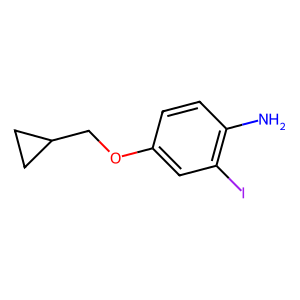
4-(cyclopropylmethoxy)-2-iodoaniline
Names and Identifiers of 4-(cyclopropylmethoxy)-2-iodoaniline
CAS Number |
1000801-51-3 |
|---|---|
IUPAC Name |
4-(cyclopropylmethoxy)-2-iodanyl-aniline |
Canonical SMILES |
C1CC1COC2=CC(=C(C=C2)N)I |
Physical and chemical properties of 4-(cyclopropylmethoxy)-2-iodoaniline
Molecular Formula |
C10H12INO |
|---|---|
Molecular Weight |
289.11 |
Safety Information of 4-(cyclopropylmethoxy)-2-iodoaniline

Applications of 4-(cyclopropylmethoxy)-2-iodoaniline
4-(Cyclopropylmethoxy)-2-iodoaniline has several notable applications:
- Chemistry: It serves as a building block for synthesizing more complex organic molecules.
- Biology: The compound is investigated for its potential interactions with biomolecules, which could lead to new therapeutic agents.
- Medicine: Due to its biological activity, it is explored for potential use in treating various diseases, including cancer and inflammatory conditions.
- Industry: It is utilized in developing new materials and chemical processes .
Interaction Studies of 4-(cyclopropylmethoxy)-2-iodoaniline
Studies on 4-(Cyclopropylmethoxy)-2-iodoaniline focus on its interactions with biological targets. These studies aim to elucidate the compound's binding affinity and specificity towards certain enzymes or receptors. Understanding these interactions is crucial for assessing its therapeutic potential and optimizing its use in medicinal applications .
Biological Activity of 4-(cyclopropylmethoxy)-2-iodoaniline
Research indicates that 4-(Cyclopropylmethoxy)-2-iodoaniline may exhibit significant biological activity. It is being explored for its potential therapeutic properties, including anti-inflammatory and anticancer effects. The compound's mechanism of action likely involves interactions with specific molecular targets, such as enzymes or receptors, leading to modulation of cellular processes .