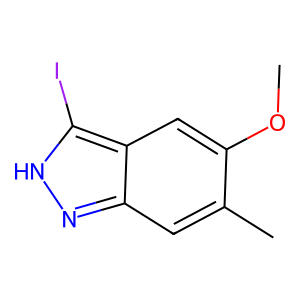
3-IODO-5-METHOXY-6-METHYL (1H)INDAZOLE
CAS No.:
1000343-52-1
M. Wt:
288.085
M. Fa:
C9H9IN2O
InChI Key:
-
Names and Identifiers of 3-IODO-5-METHOXY-6-METHYL (1H)INDAZOLE
CAS Number |
1000343-52-1 |
|---|---|
IUPAC Name |
3-iodanyl-5-methoxy-6-methyl-2H-indazole |
Canonical SMILES |
CC1=CC2=NNC(=C2C=C1OC)I |
Physical and chemical properties of 3-IODO-5-METHOXY-6-METHYL (1H)INDAZOLE
Boiling Point |
396.2±37.0 °C at 760 mmHg |
|---|---|
Density |
1.8±0.1 g/cm3 |
Exact Mass |
287.975952 |
Flash Point |
193.4±26.5 °C |
Index of Refraction |
1.703 |
LogP |
3.53 |
Molecular Formula |
C9H9IN2O |
Molecular Weight |
288.085 |
PSA |
37.91000 |
Storage condition |
2-8°C |
Vapour Pressure |
0.0±0.9 mmHg at 25°C |
Applications of 3-IODO-5-METHOXY-6-METHYL (1H)INDAZOLE
3-Iodo-5-methoxy-6-methyl-1H-indazole has potential applications in various fields:
- Pharmaceutical Development: Its biological activity makes it a candidate for drug development, particularly in oncology.
- Chemical Research: As a versatile intermediate, it can be used in synthesizing more complex indazole derivatives for further research into their properties and activities.
Interaction Studies of 3-IODO-5-METHOXY-6-METHYL (1H)INDAZOLE
Interaction studies have focused on how 3-Iodo-5-methoxy-6-methyl-1H-indazole interacts with biological systems:
- Protein Binding: The compound's ability to bind to proteins involved in drug metabolism suggests significant implications for pharmacokinetics.
- Receptor Interaction: Investigations into its interaction with various receptors have highlighted its potential as a lead compound for developing new therapeutic agents targeting specific pathways.
Biological Activity of 3-IODO-5-METHOXY-6-METHYL (1H)INDAZOLE
3-Iodo-5-methoxy-6-methyl-1H-indazole exhibits notable biological activities:
- Anticancer Properties: Compounds within the indazole class have been studied for their potential anticancer effects. Research indicates that substitutions on the indazole scaffold can enhance cytotoxicity against various cancer cell lines.
- Inhibition of Enzymes: This compound has been identified as a potential inhibitor of cytochrome P450 enzymes, particularly CYP1A2, indicating its relevance in drug metabolism and pharmacokinetics.