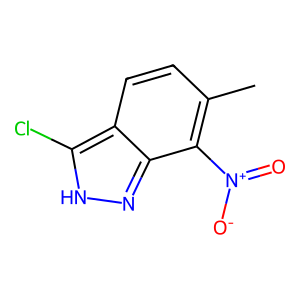
3-Chloro-6-methyl-7-nitro-1H-indazole
CAS No.:
1000342-46-0
M. Wt:
211.605
M. Fa:
C8H6ClN3O2
InChI Key:
GVLQTPUQQONAER-UHFFFAOYSA-N
Names and Identifiers of 3-Chloro-6-methyl-7-nitro-1H-indazole
CAS Number |
1000342-46-0 |
|---|---|
IUPAC Name |
3-chloro-6-methyl-7-nitro-2H-indazole |
InChI |
InChI=1S/C8H6ClN3O2/c1-4-2-3-5-6(7(4)12(13)14)10-11-8(5)9/h2-3H,1H3,(H,10,11) |
InChIKey |
GVLQTPUQQONAER-UHFFFAOYSA-N |
Canonical SMILES |
CC1=C(C2=NNC(=C2C=C1)Cl)[N+](=O)[O-] |
Physical and chemical properties of 3-Chloro-6-methyl-7-nitro-1H-indazole
Boiling Point |
411.9±40.0 °C at 760 mmHg |
|---|---|
Density |
1.6±0.1 g/cm3 |
Exact Mass |
211.014847 |
Flash Point |
202.9±27.3 °C |
Index of Refraction |
1.711 |
LogP |
2.81 |
Molecular Formula |
C8H6ClN3O2 |
Molecular Weight |
211.605 |
PSA |
74.50000 |
Storage condition |
2-8°C |
Vapour Pressure |
0.0±0.9 mmHg at 25°C |
Applications of 3-Chloro-6-methyl-7-nitro-1H-indazole
3-Chloro-6-methyl-7-nitro-1H-indazole finds applications in various fields:
- Medicinal Chemistry: It serves as a building block for synthesizing pharmaceutical compounds with potential therapeutic effects.
- Biological Research: The compound is utilized in studies investigating its interactions with biological targets to elucidate its mechanism of action.
- Industrial
Interaction Studies of 3-Chloro-6-methyl-7-nitro-1H-indazole
Research on the interaction of 3-Chloro-6-methyl-7-nitro-1H-indazole with biological molecules has provided insights into its mechanisms of action:
- Studies indicate that the compound may interact with specific enzymes and receptors, influencing their activity.
- Molecular modeling studies have been conducted to predict its binding affinity and interactions with various biological targets.
Biological Activity of 3-Chloro-6-methyl-7-nitro-1H-indazole
The biological activity of 3-Chloro-6-methyl-7-nitro-1H-indazole has been extensively studied. It has been shown to interact with various biological targets, including enzymes and receptors. Key findings include:
- Anticancer Properties: This compound has demonstrated the ability to induce apoptosis in cancer cells by disrupting mitochondrial function and activating caspases.
- Enzyme Inhibition: It inhibits certain enzymes like phosphoinositide 3-kinase, which plays a crucial role in cell growth and survival pathways.
- Antimicrobial Activity: Preliminary studies suggest potential antimicrobial effects, although further research is needed to confirm these findings.