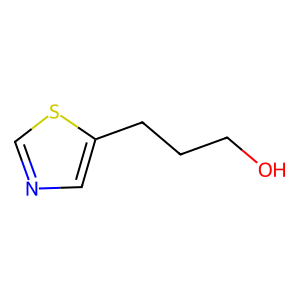
3-(1,3-thiazol-5-yl)propan-1-ol
CAS No.:
1000527-93-4
M. Wt:
143.21
M. Fa:
C6H9NOS
InChI Key:
-
Names and Identifiers of 3-(1,3-thiazol-5-yl)propan-1-ol
CAS Number |
1000527-93-4 |
|---|---|
IUPAC Name |
3-(1,3-thiazol-5-yl)propan-1-ol |
Canonical SMILES |
C1=C(SC=N1)CCCO |
Physical and chemical properties of 3-(1,3-thiazol-5-yl)propan-1-ol
Molecular Formula |
C6H9NOS |
|---|---|
Molecular Weight |
143.21 |
Safety Information of 3-(1,3-thiazol-5-yl)propan-1-ol

Applications of 3-(1,3-thiazol-5-yl)propan-1-ol
3-(1,3-Thiazol-5-yl)propan-1-ol has potential applications in various fields:
- Pharmaceuticals: Its biological activity makes it a candidate for drug development, particularly in antimicrobial and anticancer therapies.
- Agriculture: Compounds similar to this may be utilized in agrochemicals for pest control or as growth enhancers in crops.
- Material Science: Thiazole derivatives are sometimes used in the development of new materials due to their unique electronic properties.
Interaction Studies of 3-(1,3-thiazol-5-yl)propan-1-ol
Interaction studies involving 3-(1,3-Thiazol-5-yl)propan-1-ol focus on its binding affinity with various biological targets:
- Protein Binding: Research has shown that thiazole derivatives can bind effectively to specific proteins involved in disease pathways, suggesting potential therapeutic roles.
- Enzyme Inhibition: Some studies indicate that these compounds may inhibit enzymes associated with metabolic pathways, contributing to their biological effects.
Biological Activity of 3-(1,3-thiazol-5-yl)propan-1-ol
Research indicates that compounds containing thiazole rings exhibit significant biological activities, including:
- Antimicrobial Properties: Thiazole derivatives have been shown to possess antibacterial and antifungal activities. For instance, related thiazole compounds have demonstrated effectiveness against various pathogens.
- Antitumor Activity: Some thiazole derivatives are being investigated for their potential in cancer treatment due to their ability to inhibit tumor cell proliferation.
- Anti-inflammatory Effects: Certain thiazole-containing compounds exhibit anti-inflammatory properties, making them candidates for treating inflammatory diseases.