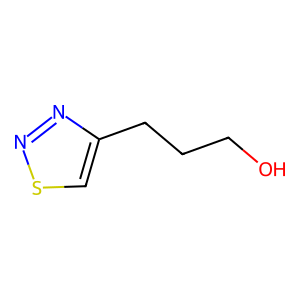
3-(1,2,3-Thiadiazol-4-yl)propan-1-ol
CAS No.:
1000565-20-7
M. Wt:
144.20
M. Fa:
C5H8N2OS
InChI Key:
ORYXZWJVYJBXRP-UHFFFAOYSA-N
Names and Identifiers of 3-(1,2,3-Thiadiazol-4-yl)propan-1-ol
CAS Number |
1000565-20-7 |
|---|---|
EC Number |
897-969-2 |
IUPAC Name |
3-(thiadiazol-4-yl)propan-1-ol |
InChI |
InChI=1S/C5H8N2OS/c8-3-1-2-5-4-9-7-6-5/h4,8H,1-3H2 |
InChIKey |
ORYXZWJVYJBXRP-UHFFFAOYSA-N |
Canonical SMILES |
C1=C(N=NS1)CCCO |
Physical and chemical properties of 3-(1,2,3-Thiadiazol-4-yl)propan-1-ol
Molecular Formula |
C5H8N2OS |
|---|---|
Molecular Weight |
144.20 |
Safety Information of 3-(1,2,3-Thiadiazol-4-yl)propan-1-ol

Applications of 3-(1,2,3-Thiadiazol-4-yl)propan-1-ol
3-(1,2,3-thiadiazol-4-yl)propan-1-ol has several potential applications:
- Pharmaceuticals: Due to its biological activity, it may serve as a lead compound in drug development for antibacterial and neuroprotective therapies.
- Agricultural Chemicals: Its antibacterial properties could be explored for use in agricultural fungicides or bactericides.
Interaction Studies of 3-(1,2,3-Thiadiazol-4-yl)propan-1-ol
Studies on the interactions of 3-(1,2,3-thiadiazol-4-yl)propan-1-ol with biological systems are crucial for understanding its pharmacological potential. Research indicates that this compound can interact with various enzymes and proteins, influencing cellular pathways and potentially leading to therapeutic effects.
Biological Activity of 3-(1,2,3-Thiadiazol-4-yl)propan-1-ol
Compounds containing thiadiazole rings, including 3-(1,2,3-thiadiazol-4-yl)propan-1-ol, have been shown to exhibit a range of biological activities. These include:
- Antibacterial properties: Thiadiazoles have demonstrated effectiveness against various bacterial strains.
- Antioxidative effects: They can scavenge free radicals and protect against oxidative stress.
- Neuroprotective effects: Some studies suggest that thiadiazole derivatives may have potential neuroprotective properties.