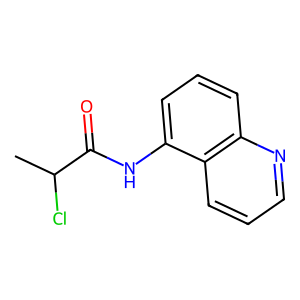
2-chloro-N-(quinolin-5-yl)propanamide
Names and Identifiers of 2-chloro-N-(quinolin-5-yl)propanamide
CAS Number |
1000930-68-6 |
|---|---|
EC Number |
981-576-9 |
IUPAC Name |
2-chloro-N-quinolin-5-ylpropanamide |
InChI |
InChI=1S/C12H11ClN2O/c1-8(13)12(16)15-11-6-2-5-10-9(11)4-3-7-14-10/h2-8H,1H3,(H,15,16) |
InChIKey |
KMLNZLIMQZFCHQ-UHFFFAOYSA-N |
Canonical SMILES |
CC(C(=O)NC1=CC=CC2=C1C=CC=N2)Cl |
Safety Information of 2-chloro-N-(quinolin-5-yl)propanamide

Applications of 2-chloro-N-(quinolin-5-yl)propanamide
2-chloro-N-(quinolin-5-yl)propanamide has several applications:
- Chemical Research: It serves as an intermediate in the synthesis of more complex organic molecules and pharmaceuticals.
- Biological Studies: The compound is investigated for its potential biological activities, including antimicrobial and anticancer properties.
- Material Science: It is utilized in developing new materials and chemical processes due to its unique chemical properties.
Interaction Studies of 2-chloro-N-(quinolin-5-yl)propanamide
The interaction studies of 2-chloro-N-(quinolin-5-yl)propanamide focus on its binding affinity to various biological targets. These studies help elucidate its mechanism of action and potential therapeutic effects. For instance, it may interact with key enzymes involved in cell proliferation or survival pathways, which is crucial in cancer research.
Biological Activity of 2-chloro-N-(quinolin-5-yl)propanamide
Research indicates that 2-chloro-N-(quinolin-5-yl)propanamide exhibits potential biological activities, particularly in antimicrobial and anticancer research. Its mechanism of action may involve interactions with specific molecular targets such as enzymes or receptors within biological systems. This compound is being studied for its therapeutic potential against various diseases, making it a subject of interest in medicinal chemistry.