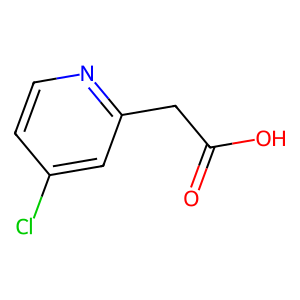
2-(4-Chloropyridin-2-yl)acetic acid
Names and Identifiers of 2-(4-Chloropyridin-2-yl)acetic acid
CAS Number |
1000567-55-4 |
|---|---|
MDL Number |
MFCD09925237 |
IUPAC Name |
2-(4-chloropyridin-2-yl)acetic acid |
InChI |
InChI=1S/C7H6ClNO2/c8-5-1-2-9-6(3-5)4-7(10)11/h1-3H,4H2,(H,10,11) |
InChIKey |
VIROCCWDLDCQNI-UHFFFAOYSA-N |
Canonical SMILES |
C1=CN=C(C=C1Cl)CC(=O)O |
UNSPSC Code |
12352100 |
Physical and chemical properties of 2-(4-Chloropyridin-2-yl)acetic acid
Exact Mass |
171.00900 |
|---|---|
H Bond Acceptors |
3 |
H Bond Donors |
1 |
LogP |
1.36210 |
Molecular Formula |
C7H6ClNO2 |
Molecular Weight |
171.58100 |
PSA |
50.19000 |
Safety Information of 2-(4-Chloropyridin-2-yl)acetic acid

Applications of 2-(4-Chloropyridin-2-yl)acetic acid
2-(4-Chloropyridin-2-yl)acetic acid has several applications, particularly in pharmaceuticals:
- Drug Development: Its role as an mPGES-1 inhibitor makes it a candidate for developing anti-inflammatory drugs.
- Chemical Intermediates: It serves as a building block for synthesizing more complex organic molecules used in various chemical industries.
- Research Tools: The compound is utilized in biochemical assays to study enzyme inhibition and related pathways.
Interaction Studies of 2-(4-Chloropyridin-2-yl)acetic acid
Studies on 2-(4-Chloropyridin-2-yl)acetic acid have focused on its interactions with biological targets, particularly enzymes involved in inflammatory pathways. The compound's ability to inhibit mPGES-1 suggests that it may also interact with other related enzymes or receptors, potentially influencing various biological processes. Further research is necessary to elucidate these interactions fully and understand their implications for therapeutic applications.
Biological Activity of 2-(4-Chloropyridin-2-yl)acetic acid
Research indicates that 2-(4-Chloropyridin-2-yl)acetic acid exhibits significant biological activity, particularly as an inhibitor of certain enzymes involved in inflammatory processes. It has been studied for its potential role in cancer therapy, specifically targeting the enzyme microsomal prostaglandin E synthase-1 (mPGES-1), which is implicated in tumor progression and inflammation. The compound has shown selective inhibitory activity in low micromolar concentrations against mPGES-1, suggesting its potential as a therapeutic agent in managing inflammation-related diseases.