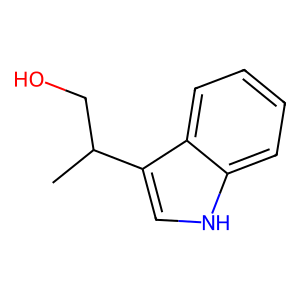
2-(1H-indol-3-yl)propan-1-ol
Names and Identifiers of 2-(1H-indol-3-yl)propan-1-ol
CAS Number |
10006-92-5 |
|---|---|
IUPAC Name |
2-(1H-indol-3-yl)propan-1-ol |
InChI |
InChI=1S/C11H13NO/c1-8(7-13)10-6-12-11-5-3-2-4-9(10)11/h2-6,8,12-13H,7H2,1H3 |
InChIKey |
BQJNIKZTDTZGFT-UHFFFAOYSA-N |
Canonical SMILES |
CC(CO)C1=CNC2=CC=CC=C21 |
Physical and chemical properties of 2-(1H-indol-3-yl)propan-1-ol
Exact Mass |
175.10000 |
|---|---|
LogP |
2.26370 |
Molecular Formula |
C11H13NO |
Molecular Weight |
175.22700 |
PSA |
36.02000 |
Safety Information of 2-(1H-indol-3-yl)propan-1-ol

Applications of 2-(1H-indol-3-yl)propan-1-ol
2-(1H-indol-3-yl)propan-1-ol has potential applications in various fields:
- Pharmaceuticals: Due to its interaction with neurotransmitter receptors, it may serve as a lead compound for developing antidepressants or anxiolytics.
- Agriculture: Its structural similarity to plant hormones suggests potential use as a growth regulator or herbicide.
- Chemical Research: It acts as a building block for synthesizing more complex organic molecules and studying structure–activity relationships in drug design.
Interaction Studies of 2-(1H-indol-3-yl)propan-1-ol
Studies on 2-(1H-indol-3-yl)propan-1-ol have focused on its interactions with various biological targets. It has shown potential effects on neurotransmitter levels by modulating serotonin pathways, which could influence cognitive functions and mood disorders. Additionally, research indicates that it may interact with enzymes involved in metabolic pathways, thereby affecting physiological processes related to amino acid metabolism.
Biological Activity of 2-(1H-indol-3-yl)propan-1-ol
The biological activity of 2-(1H-indol-3-yl)propan-1-ol is primarily attributed to its interaction with various molecular targets. It has been shown to bind to serotonin receptors, suggesting a role in neurotransmission and mood regulation. Additionally, indole derivatives are known for their anti-inflammatory, anticancer, and antimicrobial properties. The specific mechanisms through which 2-(1H-indol-3-yl)propan-1-ol exerts its effects are still being explored, but it is hypothesized that it may influence enzyme activity and gene expression in biological systems.
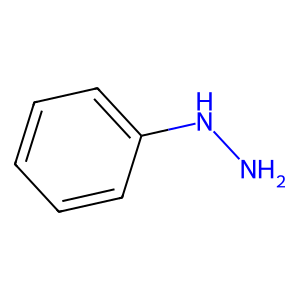 Cas:100-63-0

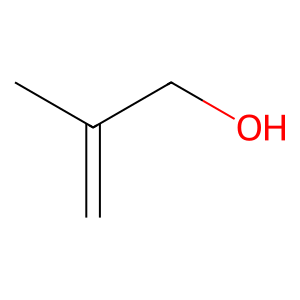 Cas:513-42-8
