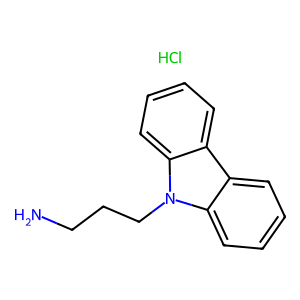
3-(9H-carbazol-9-yl)propan-1-amine hydrochloride
CAS No.:
1001349-06-9
M. Wt:
260.76188
M. Fa:
C15H17ClN2
InChI Key:
-
Names and Identifiers of 1001349-06-9
CAS Number |
1001349-06-9 |
|---|---|
IUPAC Name |
3-carbazol-9-ylpropan-1-amine;hydrochloride |
Canonical SMILES |
C1=CC=C2C(=C1)C3=CC=CC=C3N2CCCN.Cl |
Physical and chemical properties of 1001349-06-9
Melting Point |
273 °C |
|---|---|
Molecular Formula |
C15H17ClN2 |
Molecular Weight |
260.76188 |
Applications of 1001349-06-9
3-(9H-carbazol-9-yl)propan-1-amine hydrochloride finds applications in various fields:
- Pharmaceutical Development: It serves as a building block for synthesizing new drugs, particularly in oncology and infectious diseases.
- Material Science: Its unique properties allow for exploration in organic electronics and photonic devices due to the conjugated system present in carbazole derivatives.
- Research Tool: Utilized in biochemical assays to study enzyme interactions and cellular processes related to neurodegenerative diseases.
Interaction Studies of 1001349-06-9
Interaction studies involving 3-(9H-carbazol-9-yl)propan-1-amine hydrochloride focus on its binding affinities with various biological targets:
- Receptor Binding: Investigations into how this compound interacts with neurotransmitter receptors have shown promise in neuropharmacology.
- Enzyme Inhibition: Studies reveal that it may inhibit certain enzymes linked to cancer progression, suggesting a potential therapeutic role.
Biological Activity of 1001349-06-9
3-(9H-carbazol-9-yl)propan-1-amine hydrochloride exhibits significant biological activity, particularly in the field of pharmacology. Research indicates that compounds containing carbazole structures often display:
- Anticancer Properties: Some derivatives have shown potential in inhibiting cancer cell proliferation.
- Antimicrobial Activity: The compound may possess antibacterial and antifungal properties, making it a candidate for further development in antimicrobial therapies.
- Neuroprotective Effects: There is emerging evidence suggesting that similar compounds can protect neuronal cells from oxidative stress.