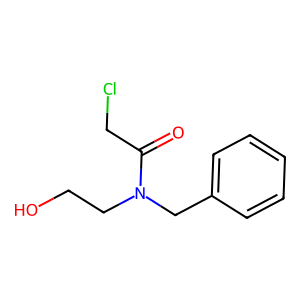
N-Benzyl-2-chloro-N-(2-hydroxyethyl)acetamide
Names and Identifiers of 100129-49-5
CAS Number |
100129-49-5 |
|---|---|
MDL Number |
MFCD03552054 |
IUPAC Name |
N-benzyl-2-chloro-N-(2-hydroxyethyl)acetamide |
InChI |
InChI=1S/C11H14ClNO2/c12-8-11(15)13(6-7-14)9-10-4-2-1-3-5-10/h1-5,14H,6-9H2 |
InChIKey |
JYUWNFAYERZSNN-UHFFFAOYSA-N |
Canonical SMILES |
O=C(CCl)N(CCO)CC1=CC=CC=C1 |
UNSPSC Code |
12352100 |
Physical and chemical properties of 100129-49-5
Boiling Point |
392.7ºC at 760 mmHg |
|---|---|
Density |
1.23g/cm3 |
Exact Mass |
227.07100 |
Flash Point |
191.3ºC |
Index of Refraction |
1.56 |
LogP |
1.24630 |
Molecular Formula |
C11H14ClNO2 |
Molecular Weight |
227.68700 |
PSA |
40.54000 |
Vapour Pressure |
7.17E-07mmHg at 25°C |
Safety Information of 100129-49-5

Applications of 100129-49-5
N-benzyl-2-chloro-N-(2-hydroxyethyl)acetamide finds diverse applications across various domains:
- Chemistry: Serves as an intermediate in synthesizing more complex organic compounds.
- Biology: Utilized in enzyme inhibition studies and protein-ligand interaction research.
- Medicine: Explored for its potential therapeutic properties, particularly in antimicrobial and anticancer treatments.
- Industry: Employed in producing specialty chemicals and as a reagent in chemical processes.
Interaction Studies of 100129-49-5
The mechanism of action for N-benzyl-2-chloro-N-(2-hydroxyethyl)acetamide involves interactions with specific molecular targets. The chloro group acts as an electrophile, facilitating covalent bond formation with nucleophilic sites on biomolecules. The hydroxyethyl group enhances solubility and bioavailability, while the benzyl group contributes to binding affinity and specificity. These interactions are crucial for understanding its biological activity and potential therapeutic uses.
Biological Activity of 100129-49-5
Research indicates that N-benzyl-2-chloro-N-(2-hydroxyethyl)acetamide exhibits potential biological activities, including:
- Antimicrobial Properties: Investigated for its ability to inhibit microbial growth.
- Anticancer Activity: Studied for its effects on cancer cell lines, suggesting potential therapeutic applications.
The compound's ability to interact with biological molecules makes it a candidate for further research in drug development.
 Cas:104-63-2


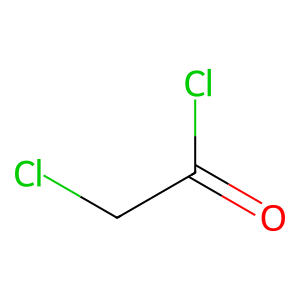 Cas:79-04-9