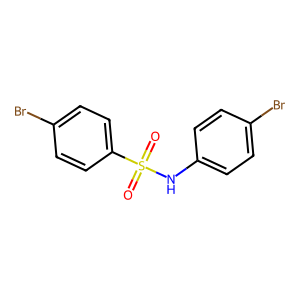
4-Bromo-N-(4-bromophenyl)benzenesulfonamide
CAS No.:
100124-40-1
M. Wt:
391.07800
M. Fa:
C12H9Br2NO2S
InChI Key:
IZUXDJFNEQYQTQ-UHFFFAOYSA-N
Names and Identifiers of 100124-40-1
CAS Number |
100124-40-1 |
|---|---|
MDL Number |
MFCD00450588 |
IUPAC Name |
4-bromo-N-(4-bromophenyl)benzene-1-sulfonamide |
InChI |
InChI=1S/C12H9Br2NO2S/c13-9-1-5-11(6-2-9)15-18(16,17)12-7-3-10(14)4-8-12/h1-8,15H |
InChIKey |
IZUXDJFNEQYQTQ-UHFFFAOYSA-N |
Canonical SMILES |
O=S(=O)(NC1=CC=C(Br)C=C1)C1=CC=C(Br)C=C1 |
UNSPSC Code |
12352100 |
Physical and chemical properties of 100124-40-1
Exact Mass |
388.87200 |
|---|---|
H Bond Acceptors |
2 |
H Bond Donors |
1 |
LogP |
5.16620 |
Molecular Formula |
C12H9Br2NO2S |
Molecular Weight |
391.07800 |
PSA |
54.55000 |
Safety Information of 100124-40-1

Applications of 100124-40-1
The primary applications of 4-Bromo-N-(4-bromophenyl)benzenesulfonamide include:
- Pharmaceutical Development: As a potential lead compound for developing new antibacterial or anticancer agents.
- Chemical Research: Used as an intermediate in organic synthesis and material science.
- Biological Studies: Employed in research to understand mechanisms of action related to its biological activities.
Interaction Studies of 100124-40-1
Interaction studies involving 4-Bromo-N-(4-bromophenyl)benzenesulfonamide focus on:
- Protein Binding: Investigating how the compound interacts with various proteins, which is crucial for understanding its pharmacokinetics and pharmacodynamics.
- Enzyme Inhibition: Studies on its ability to inhibit specific enzymes related to bacterial growth or cancer cell proliferation.
- Molecular Docking Studies: Computational methods are often used to predict how this compound might interact with biological targets at a molecular level.
These studies are essential for elucidating its potential therapeutic roles and optimizing its efficacy.
Biological Activity of 100124-40-1
4-Bromo-N-(4-bromophenyl)benzenesulfonamide exhibits significant biological activities, primarily due to its sulfonamide moiety. Sulfonamides are known for their:
- Antibacterial Properties: They inhibit bacterial growth by interfering with folate synthesis.
- Antifungal and Antitumor Activities: Research indicates potential effectiveness against various cancer cell lines and fungal infections.
- Anti-inflammatory Effects: Some studies suggest that compounds containing sulfonamide groups can reduce inflammation.
These properties make it a candidate for further pharmacological studies and potential therapeutic applications.
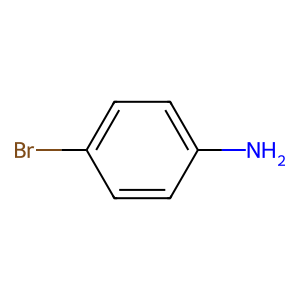 Cas:106-40-1

 Cas:98-58-8
