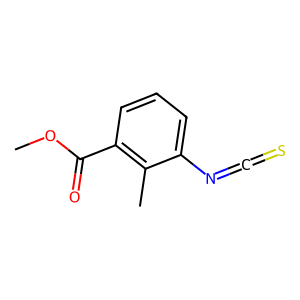
3-Isothiocyanato-2-Methylbenzoic acid Methyl ester
CAS No.:
1001185-62-1
M. Wt:
207.24900
M. Fa:
C10H9NO2S
InChI Key:
-
Names and Identifiers of 1001185-62-1
CAS Number |
1001185-62-1 |
|---|---|
IUPAC Name |
methyl 3-isothiocyanato-2-methyl-benzoate |
Canonical SMILES |
CC1=C(C=CC=C1N=C=S)C(=O)OC |
Physical and chemical properties of 1001185-62-1
Exact Mass |
207.03500 |
|---|---|
LogP |
2.51590 |
Molecular Formula |
C10H9NO2S |
Molecular Weight |
207.24900 |
PSA |
70.75000 |
Applications of 1001185-62-1
3-Isothiocyanato-2-methylbenzoic acid methyl ester finds applications across various fields:
- Pharmaceutical Research: Investigated for its potential as an antimicrobial and anticancer agent.
- Agricultural Chemistry: Used in studies related to pest control and plant defense mechanisms.
- Chemical Synthesis: Serves as an intermediate in the synthesis of more complex organic molecules.
The versatility of this compound highlights its significance in both academic research and practical applications.
Interaction Studies of 1001185-62-1
Research into the interactions of 3-isothiocyanato-2-methylbenzoic acid methyl ester with biological systems has yielded insights into its mechanism of action:
- Protein Binding Studies: Investigations have shown that this compound can bind to specific proteins, affecting their function and potentially leading to therapeutic effects.
- Metabolic Pathway Analysis: Studies indicate that it may influence metabolic pathways related to detoxification and cellular stress responses.
These interaction studies are crucial for understanding how this compound can be utilized effectively in therapeutic contexts.
Biological Activity of 1001185-62-1
3-Isothiocyanato-2-methylbenzoic acid methyl ester exhibits notable biological activities:
- Antimicrobial Properties: Studies suggest that this compound has antimicrobial effects against various bacterial strains, making it a candidate for further research in antimicrobial agents.
- Anticancer Activity: Preliminary research indicates potential anticancer properties, particularly in inhibiting tumor growth and inducing apoptosis in cancer cell lines.
- Enzyme Inhibition: It may act as an inhibitor of certain enzymes, influencing metabolic pathways relevant to disease processes.
These biological activities make it a compound of interest in pharmacological research.