
(E)-N-(2-hydroxy-1,1-dimethyl-ethyl)-3-(3-nitrophenyl)acrylamide
CAS No.:
100098-62-2
M. Wt:
264.27700
M. Fa:
C13H16N2O4
InChI Key:
-
Names and Identifiers of 100098-62-2
CAS Number |
100098-62-2 |
|---|---|
IUPAC Name |
(E)-N-(2-methyl-1-oxidanyl-propan-2-yl)-3-(3-nitrophenyl)prop-2-enamide |
Canonical SMILES |
CC(C)(CO)NC(=O)/C=C/C1=CC(=CC=C1)[N+](=O)[O-] |
Physical and chemical properties of 100098-62-2
Exact Mass |
264.11100 |
|---|---|
LogP |
2.40920 |
Molecular Formula |
C13H16N2O4 |
Molecular Weight |
264.27700 |
PSA |
95.15000 |
Applications of 100098-62-2
N-(2-hydroxy-1,1-dimethylethyl)-3-(3-nitrophenyl)acrylamide has several applications across various fields:
- Pharmaceuticals: It may serve as a lead compound for drug development targeting cancer or microbial infections.
- Material Science: Its polymerizable nature allows it to be used in creating hydrogels or coatings with specific properties.
- Biotechnology: It can be utilized in the design of biosensors or as a reagent in biochemical assays.
Interaction Studies of 100098-62-2
Interaction studies involving N-(2-hydroxy-1,1-dimethylethyl)-3-(3-nitrophenyl)acrylamide focus on its binding affinity to various biological targets. These studies often employ techniques such as:
- Molecular docking simulations: To predict how well the compound binds to specific proteins or enzymes.
- In vitro assays: To assess its biological activity against cell lines or microbial cultures.
- Spectroscopic methods: To analyze interaction dynamics between the compound and biomolecules.
Such studies are crucial for understanding its mechanism of action and potential therapeutic uses.
Biological Activity of 100098-62-2
N-(2-hydroxy-1,1-dimethylethyl)-3-(3-nitrophenyl)acrylamide exhibits notable biological activities. Compounds with similar structures are often investigated for their potential as:
- Anticancer agents: The nitrophenyl group may enhance the compound's ability to interact with biological targets involved in cancer progression.
- Antimicrobial properties: Some studies suggest that derivatives of acrylamides can exhibit antibacterial and antifungal activities.
- Enzyme inhibitors: The structural features may allow the compound to inhibit specific enzymes, which could be beneficial in therapeutic contexts.
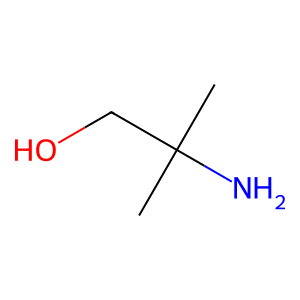 Cas:124-68-5
