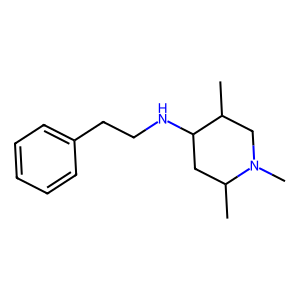
Phenethyl-(1,2,5-trimethyl-piperidin-4-yl)-amine
Names and Identifiers of 100096-38-6
CAS Number |
100096-38-6 |
|---|---|
IUPAC Name |
1,2,5-trimethyl-N-(2-phenylethyl)piperidin-4-amine |
InChI |
InChI=1S/C16H26N2/c1-13-12-18(3)14(2)11-16(13)17-10-9-15-7-5-4-6-8-15/h4-8,13-14,16-17H,9-12H2,1-3H3 |
InChIKey |
KPRIEJCCTJJFOU-UHFFFAOYSA-N |
Canonical SMILES |
CC1CC(C(CN1C)C)NCCC2=CC=CC=C2 |
Physical and chemical properties of 100096-38-6
Exact Mass |
246.21000 |
|---|---|
LogP |
2.87620 |
Molecular Formula |
C16H26N2 |
Molecular Weight |
246.39100 |
PSA |
15.27000 |
Applications of 100096-38-6
Phenethyl-(1,2,5-trimethyl-piperidin-4-yl)-amine finds applications across multiple fields:
- Chemistry: Serves as a building block for synthesizing more complex organic molecules.
- Biology: Investigated for its potential biological activities.
- Medicine: Explored for therapeutic applications targeting specific molecular pathways.
- Industry: Used in developing new materials and chemical processes.
Interaction Studies of 100096-38-6
Studies on Phenethyl-(1,2,5-trimethyl-piperidin-4-yl)-amine focus on its interactions with various biological targets. These interactions may modulate enzymatic activity or receptor binding, which could lead to significant pharmacological effects. Detailed mechanistic studies are necessary to fully understand its impact on biological systems.
Biological Activity of 100096-38-6
Research indicates that Phenethyl-(1,2,5-trimethyl-piperidin-4-yl)-amine exhibits potential biological activity. It is studied for its interactions with biological molecules, including receptors and enzymes. The compound's mechanism of action may involve modulation of these targets, leading to various physiological effects. Ongoing studies aim to elucidate its therapeutic potential and safety profile.