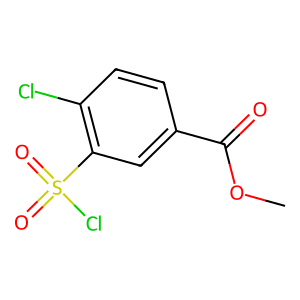
Methyl 4-chloro-3-(chlorosulfonyl)benzoate
Names and Identifiers of 1000933-19-6
CAS Number |
1000933-19-6 |
|---|---|
EC Number |
848-280-0 |
MDL Number |
MFCD09816501 |
IUPAC Name |
methyl 4-chloro-3-chlorosulfonylbenzoate |
InChI |
InChI=1S/C8H6Cl2O4S/c1-14-8(11)5-2-3-6(9)7(4-5)15(10,12)13/h2-4H,1H3 |
InChIKey |
SXAYTEZGGGOESJ-UHFFFAOYSA-N |
Canonical SMILES |
COC(=O)C1=CC(=C(C=C1)Cl)S(=O)(=O)Cl |
UNSPSC Code |
12352100 |
Physical and chemical properties of 1000933-19-6
Exact Mass |
267.93600 |
|---|---|
H Bond Acceptors |
3 |
H Bond Donors |
0 |
LogP |
3.13490 |
Molecular Formula |
C8H6Cl2O4S |
Molecular Weight |
269.10200 |
PSA |
68.82000 |
Safety Information of 1000933-19-6

Applications of 1000933-19-6
Methyl 4-chloro-3-(chlorosulfonyl)benzoate has several notable applications:
- Organic Synthesis: It serves as an intermediate in the synthesis of more complex molecules, particularly in pharmaceutical development.
- Flavoring Agent: Due to its unique sulfur-containing structure, it has been explored for use as a flavoring agent in food chemistry.
- Chemical Reagents: The compound is utilized as a reagent in various organic reactions, including nucleophilic substitutions and coupling reactions.
These applications highlight its significance in both industrial and research contexts.
Interaction Studies of 1000933-19-6
Interaction studies involving methyl 4-chloro-3-(chlorosulfonyl)benzoate focus on its reactivity with biological targets. The compound's ability to inhibit specific enzymes suggests potential therapeutic applications. Further research may explore its interactions with various biomolecules to better understand its biological mechanisms and therapeutic potential.
Biological Activity of 1000933-19-6
Research indicates that methyl 4-chloro-3-(chlorosulfonyl)benzoate possesses potential biological activities. It has been investigated for its antimicrobial and anticancer properties, making it a candidate for further exploration in drug development. The compound's mechanism of action involves the inhibition of specific enzymes by binding to their active sites, which can disrupt various biochemical pathways.
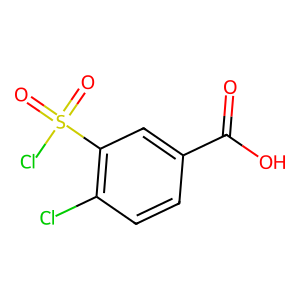 Cas:2494-79-3
