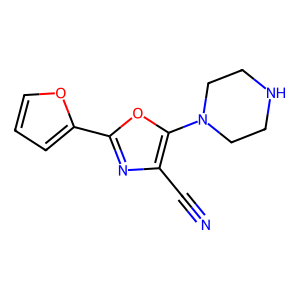
2-(furan-2-yl)-5-piperazin-1-yl-1,3-oxazole-4-carbonitrile
CAS No.:
1000932-90-0
M. Wt:
244.25
M. Fa:
C12H12N4O2
InChI Key:
-
Names and Identifiers of 1000932-90-0
CAS Number |
1000932-90-0 |
|---|---|
IUPAC Name |
2-(furan-2-yl)-5-piperazin-1-yl-1,3-oxazole-4-carbonitrile |
Canonical SMILES |
C1CN(CCN1)C2=C(N=C(O2)C3=CC=CO3)C#N |
Physical and chemical properties of 1000932-90-0
Boiling Point |
475.1±55.0 °C(Predicted) |
|---|---|
Density |
1.37±0.1 g/cm3(Predicted) |
Molecular Formula |
C12H12N4O2 |
Molecular Weight |
244.25 |
Safety Information of 1000932-90-0

Applications of 1000932-90-0
The compound has potential applications in various fields:
- Pharmaceutical Development: As a lead compound in drug discovery due to its diverse biological activities.
- Material Science: Used in the development of advanced materials owing to its unique structural properties.
- Chemical Probes: Acts as a molecular probe in biochemical assays to investigate biological processes involving heterocycles.
Interaction Studies of 1000932-90-0
Studies on the interactions of 2-(Furan-2-yl)-5-(piperazin-1-yl)-1,3-oxazole-4-carbonitrile with biological macromolecules reveal:
- Binding Affinity: The compound shows promising binding affinity towards certain receptors, which could be exploited for therapeutic purposes.
- Mechanism of Action: Investigations into its mechanism highlight interactions with neurotransmitter systems and potential modulation of signal transduction pathways.
Biological Activity of 1000932-90-0
Research indicates that compounds containing oxazole and piperazine moieties exhibit significant biological activities, including:
- Antimicrobial Properties: Many derivatives possess antibacterial and antifungal activities due to their ability to interact with biological targets such as enzymes and receptors.
- CNS Activity: Piperazine derivatives are known for their psychoactive effects, making them candidates for neuropharmacological studies.
- Anti-inflammatory Effects: Some studies suggest that similar compounds can modulate inflammatory pathways, offering potential therapeutic applications in inflammatory diseases.