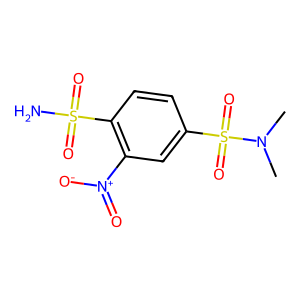
1-N,1-N-dimethyl-3-nitrobenzene-1,4-disulfonamide
Names and Identifiers of 1000932-66-0
CAS Number |
1000932-66-0 |
|---|---|
IUPAC Name |
N4,N4-dimethyl-2-nitro-benzene-1,4-disulfonamide |
Canonical SMILES |
CN(C)S(=O)(=O)C1=CC(=C(C=C1)S(=O)(=O)N)[N+](=O)[O-] |
Physical and chemical properties of 1000932-66-0
Molecular Formula |
C8H11N3O6S2 |
|---|---|
Molecular Weight |
309.3 |
Applications of 1000932-66-0
The applications of 1-N,1-N-dimethyl-3-nitrobenzene-1,4-disulfonamide span several fields:
- Pharmaceuticals: Due to its antibacterial properties, it can be developed into new antibiotics or therapeutic agents for treating infections.
- Materials Science: Its unique chemical structure may lend itself to applications in developing polymers or other materials with specific properties.
- Research: It serves as a useful intermediate in organic synthesis and medicinal chemistry research.
Interaction Studies of 1000932-66-0
Studies on the interactions of 1-N,1-N-dimethyl-3-nitrobenzene-1,4-disulfonamide with biological systems are crucial for understanding its pharmacological profile. Interaction studies often focus on:
- Enzyme Inhibition: Evaluating how effectively it inhibits specific enzymes related to bacterial metabolism.
- Binding Affinity: Investigating its binding characteristics to target proteins or receptors.
- Toxicity Assessments: Understanding potential side effects or toxicological profiles through in vitro and in vivo studies.
These investigations help elucidate its potential therapeutic benefits and safety.
Biological Activity of 1000932-66-0
1-N,1-N-dimethyl-3-nitrobenzene-1,4-disulfonamide exhibits notable biological activity, primarily due to its sulfonamide moiety. Sulfonamides are known for their antibacterial properties, acting as competitive inhibitors of bacterial dihydropteroate synthase, an enzyme critical for folate synthesis. This mechanism makes them effective against a range of bacterial infections. Additionally, compounds with similar structures have been explored for anti-inflammatory and anticancer activities, suggesting potential therapeutic applications beyond traditional uses.