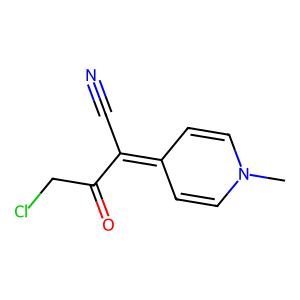
4-Chloro-2-(1-methyl-1,4-dihydropyridin-4-ylidene)-3-oxobutanenitrile
CAS No.:
1000932-32-0
M. Wt:
208.64
M. Fa:
C10H9ClN2O
InChI Key:
GDYOGYFCFARNPF-UHFFFAOYSA-N
Names and Identifiers of 1000932-32-0
CAS Number |
1000932-32-0 |
|---|---|
IUPAC Name |
4-chloro-2-(1-methylpyridin-4-ylidene)-3-oxobutanenitrile |
InChI |
InChI=1S/C10H9ClN2O/c1-13-4-2-8(3-5-13)9(7-12)10(14)6-11/h2-5H,6H2,1H3 |
InChIKey |
GDYOGYFCFARNPF-UHFFFAOYSA-N |
Canonical SMILES |
CN1C=CC(=C(C#N)C(=O)CCl)C=C1 |
Physical and chemical properties of 1000932-32-0
Molecular Formula |
C10H9ClN2O |
|---|---|
Molecular Weight |
208.64 |
Applications of 1000932-32-0
This compound has several applications:
- Pharmaceuticals: Due to its biological activity, it is explored as a potential drug candidate for various diseases.
- Agricultural Chemicals: Its derivatives may be utilized in agrochemicals for pest control due to their antimicrobial properties.
- Chemical Intermediates: It serves as an intermediate in the synthesis of more complex organic molecules.
Interaction Studies of 1000932-32-0
Studies focusing on the interactions of 4-Chloro-2-(1-methyl-1,4-dihydropyridin-4-ylidene)-3-oxobutanenitrile with biological macromolecules are essential:
- Protein Binding Studies: Understanding how this compound interacts with proteins can provide insights into its mechanism of action.
- Receptor Interaction: Investigating its binding affinity to various receptors can help elucidate its therapeutic potential.
Biological Activity of 1000932-32-0
Research indicates that 4-Chloro-2-(1-methyl-1,4-dihydropyridin-4-ylidene)-3-oxobutanenitrile exhibits significant biological activities. Its derivatives have shown:
- Antioxidant Properties: The compound is noted for its antioxidative capabilities, which are crucial for mitigating oxidative stress in biological systems.
- Antimicrobial Activity: Preliminary studies suggest potential antimicrobial properties against various pathogens.
- Enzyme Inhibition: It may act as an inhibitor for certain enzymes, contributing to its therapeutic potential.