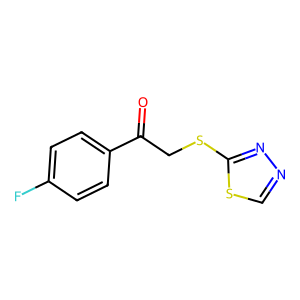
Ethanone, 1-(4-fluorophenyl)-2-(1,3,4-thiadiazol-2-ylthio)-
CAS No.:
1000932-10-4
M. Wt:
254.3
M. Fa:
C10H7FN2OS2
InChI Key:
-
Names and Identifiers of 1000932-10-4
CAS Number |
1000932-10-4 |
|---|---|
IUPAC Name |
1-(4-fluorophenyl)-2-(1,3,4-thiadiazol-2-ylsulfanyl)ethanone |
Canonical SMILES |
C1=CC(=CC=C1C(=O)CSC2=NN=CS2)F |
Physical and chemical properties of 1000932-10-4
Acidity coefficient |
-1.55±0.10(Predicted) |
|---|---|
Boiling Point |
418.2±51.0 °C(Predicted) |
Density |
1.45±0.1 g/cm3(Predicted) |
Molecular Formula |
C10H7FN2OS2 |
Molecular Weight |
254.3 |
Applications of 1000932-10-4
The unique chemical properties and biological activities of 1-(4-Fluorophenyl)-2-(1,3,4-thiadiazol-2-ylthio)ethanone make it suitable for various applications:
- Pharmaceutical Development: Its potential as an antifungal and MAO inhibitor positions it as a candidate for drug development against fungal infections and mood disorders.
- Research Tool: It may serve as a valuable reagent in biochemical assays aimed at studying enzyme inhibition and other biological interactions.
- Agricultural Chemistry: Given its antifungal properties, it could be explored for agricultural applications to combat plant pathogens.
Interaction Studies of 1000932-10-4
Interaction studies involving 1-(4-Fluorophenyl)-2-(1,3,4-thiadiazol-2-ylthio)ethanone have focused on its binding affinity and inhibitory effects on specific enzymes:
- Molecular Docking Studies: These studies provide insights into how the compound interacts at the molecular level with target enzymes like monoamine oxidase and fungal demethylases.
- Kinetic Studies: Evaluating the kinetics of inhibition helps determine the efficacy and mechanism of action of this compound against various biological targets.
Such studies are crucial for understanding the therapeutic potential and optimizing the structure for enhanced activity.
Biological Activity of 1000932-10-4
The biological activity of 1-(4-Fluorophenyl)-2-(1,3,4-thiadiazol-2-ylthio)ethanone is primarily attributed to its thiadiazole component. Compounds with similar structures have demonstrated a range of pharmacological effects:
- Antifungal Activity: Thiadiazole derivatives have been shown to inhibit ergosterol biosynthesis in fungi by targeting the enzyme 14-α-demethylase.
- Monoamine Oxidase Inhibition: Certain derivatives exhibit inhibitory effects on monoamine oxidase enzymes, which are crucial for neurotransmitter metabolism.
- Antileishmanial Properties: Some studies indicate that thiadiazole-based compounds possess activity against Leishmania species, suggesting potential use in treating leishmaniasis.