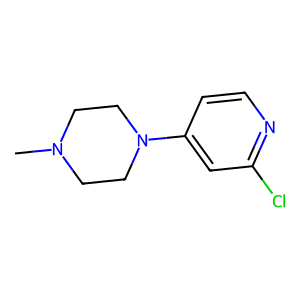
1-(2-Chloropyridin-4-YL)-4-methylpiperazine
Names and Identifiers of 1000802-63-0
CAS Number |
1000802-63-0 |
|---|---|
IUPAC Name |
1-(2-chloropyridin-4-yl)-4-methylpiperazine |
InChI |
InChI=1S/C10H14ClN3/c1-13-4-6-14(7-5-13)9-2-3-12-10(11)8-9/h2-3,8H,4-7H2,1H3 |
InChIKey |
LZNIGCHFFNADHP-UHFFFAOYSA-N |
Canonical SMILES |
CN1CCN(CC1)C2=CC(=NC=C2)Cl |
Physical and chemical properties of 1000802-63-0
Acidity coefficient |
7.12±0.42(Predicted) |
|---|---|
Boiling Point |
338.7±42.0 °C(Predicted) |
Density |
1.189±0.06 g/cm3(Predicted) |
Exact Mass |
211.08800 |
LogP |
1.48970 |
Molecular Formula |
C10H14ClN3 |
Molecular Weight |
211.69100 |
PSA |
19.37000 |
Applications of 1000802-63-0
1-(2-Chloropyridin-4-YL)-4-methylpiperazine finds applications in several fields:
- Medicinal Chemistry: It serves as a building block for synthesizing pharmaceutical compounds aimed at treating neurological disorders.
- Biological Research: The compound is utilized in studies investigating enzyme inhibitors and receptor ligands.
- Industrial Uses: It is involved in the production of agrochemicals and other industrial chemicals due to its reactivity.
Interaction Studies of 1000802-63-0
Interaction studies focus on how 1-(2-Chloropyridin-4-YL)-4-methylpiperazine binds to various biological targets. These studies aim to elucidate its binding affinity and mechanism of action concerning enzymes and receptors implicated in disease pathways. Understanding these interactions is crucial for guiding further drug development efforts and optimizing therapeutic applications.
Biological Activity of 1000802-63-0
Research indicates that 1-(2-Chloropyridin-4-YL)-4-methylpiperazine exhibits significant biological activity. It has been studied for its potential as an enzyme inhibitor, particularly in contexts related to neurological and psychiatric disorders. The compound may modulate receptor activity, influencing various biochemical pathways and potentially leading to therapeutic effects. Its interaction with specific molecular targets allows it to act as an inhibitor or modulator, impacting enzyme functions and receptor activities.