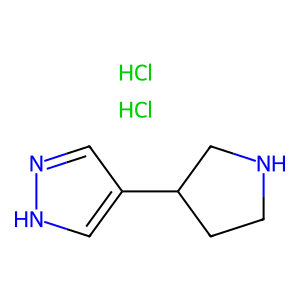
4-pyrrolidin-3-yl-1H-pyrazole;dihydrochloride
CAS No.:
1000688-81-2
M. Wt:
210.10
M. Fa:
C7H13Cl2N3
InChI Key:
-
Names and Identifiers of 1000688-81-2
CAS Number |
1000688-81-2 |
|---|---|
IUPAC Name |
4-pyrrolidin-3-yl-1H-pyrazole;dihydrochloride |
Canonical SMILES |
C1CNCC1C2=CNN=C2.Cl.Cl |
Physical and chemical properties of 1000688-81-2
Molecular Formula |
C7H13Cl2N3 |
|---|---|
Molecular Weight |
210.10 |
Safety Information of 1000688-81-2

Applications of 1000688-81-2
4-(pyrrolidin-3-yl)-1H-pyrazole dihydrochloride has diverse applications:
- Pharmaceutical Development: Utilized as a lead compound for developing new drugs targeting neurological disorders and cancer.
- Research Tool: Employed in biochemical assays to study receptor interactions and cellular signaling pathways.
- Material Science: Investigated for its potential use in synthesizing novel materials due to its coordination properties with metals.
Interaction Studies of 1000688-81-2
Studies on the interactions of 4-(pyrrolidin-3-yl)-1H-pyrazole dihydrochloride have focused on its binding affinity to various receptors. These investigations typically involve:
- In vitro assays: To assess receptor binding and activity.
- Molecular docking studies: To predict how the compound interacts at the molecular level with target proteins.
These studies are crucial for understanding the pharmacodynamics and pharmacokinetics of the compound.
Biological Activity of 1000688-81-2
4-(pyrrolidin-3-yl)-1H-pyrazole dihydrochloride exhibits significant biological activity, particularly in pharmacological applications. Research has indicated that this compound may:
- Act as an antagonist or agonist for certain receptors, influencing neurotransmitter systems.
- Exhibit anti-inflammatory properties, making it a candidate for treating conditions characterized by inflammation.
- Show potential as an antitumor agent, with studies suggesting cytotoxic effects on various cancer cell lines.
These activities are primarily attributed to the structural features of the compound that allow interaction with biological targets.