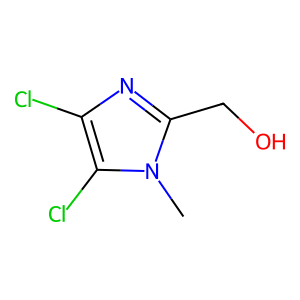
(4,5-Dichloro-1-methyl-1H-imidazol-2-yl)methanol
CAS No.:
1000684-06-9
M. Wt:
181.02000
M. Fa:
C5H6Cl2N2O
InChI Key:
QQBPEJFPFQWBER-UHFFFAOYSA-N
Names and Identifiers of 1000684-06-9
CAS Number |
1000684-06-9 |
|---|---|
IUPAC Name |
(4,5-dichloro-1-methylimidazol-2-yl)methanol |
InChI |
InChI=1S/C5H6Cl2N2O/c1-9-3(2-10)8-4(6)5(9)7/h10H,2H2,1H3 |
InChIKey |
QQBPEJFPFQWBER-UHFFFAOYSA-N |
Canonical SMILES |
CN1C(=NC(=C1Cl)Cl)CO |
Physical and chemical properties of 1000684-06-9
Exact Mass |
179.98600 |
|---|---|
LogP |
1.21920 |
Molecular Formula |
C5H6Cl2N2O |
Molecular Weight |
181.02000 |
PSA |
38.05000 |
Applications of 1000684-06-9
(4,5-Dichloro-1-methyl-1H-imidazol-2-yl)methanol has potential applications in various fields:
- Pharmaceuticals: Given its biological activity, it could serve as a lead compound for developing new drugs targeting infectious diseases or metabolic disorders.
- Agricultural Chemicals: Its antimicrobial properties may be harnessed in developing fungicides or bactericides.
- Research Tools: This compound could be used in biochemical assays to study enzyme inhibition or metabolic pathways.
Interaction Studies of 1000684-06-9
Interaction studies are crucial for elucidating the biological mechanisms associated with (4,5-Dichloro-1-methyl-1H-imidazol-2-yl)methanol:
- Enzyme Inhibition Assays: Investigating its effect on enzymes involved in glucose metabolism could reveal its antidiabetic potential.
- Binding Studies: Techniques such as surface plasmon resonance or fluorescence polarization can be employed to study how this compound interacts with target proteins.
Such studies provide insights into its pharmacodynamics and potential therapeutic uses.
Biological Activity of 1000684-06-9
Research indicates that compounds similar to (4,5-Dichloro-1-methyl-1H-imidazol-2-yl)methanol exhibit various biological activities. Its structural features suggest potential interactions with biological targets such as enzymes or receptors. For instance:
- Antimicrobial Activity: Compounds with imidazole rings are known for their antimicrobial properties. This compound may exhibit similar effects against bacteria or fungi.
- Antidiabetic Potential: Studies on related compounds have shown that they can inhibit enzymes like α-amylase and α-glucosidase, which are crucial in carbohydrate metabolism and glucose regulation.
 Cas:437658-65-6
