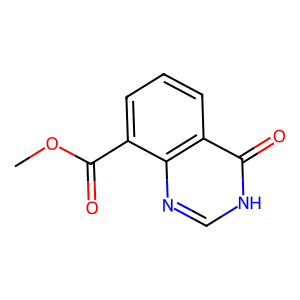
Methyl 4-oxo-3,4-dihydroquinazoline-8-carboxylate
Names and Identifiers of 1000578-10-8
CAS Number |
1000578-10-8 |
|---|---|
IUPAC Name |
methyl 4-oxo-3H-quinazoline-8-carboxylate |
InChI |
InChI=1S/C10H8N2O3/c1-15-10(14)7-4-2-3-6-8(7)11-5-12-9(6)13/h2-5H,1H3,(H,11,12,13) |
InChIKey |
FOIQBHSPCYEVGH-UHFFFAOYSA-N |
Canonical SMILES |
COC(=O)C1=CC=CC2=C1N=CNC2=O |
Physical and chemical properties of 1000578-10-8
Acidity coefficient |
0.43±0.20(Predicted) |
|---|---|
Boiling Point |
450.9±28.0 °C at 760 mmHg |
Density |
1.4±0.1 g/cm3 |
Exact Mass |
204.053497 |
Flash Point |
226.5±24.0 °C |
Index of Refraction |
1.638 |
LogP |
0.75 |
Molecular Formula |
C10H8N2O3 |
Molecular Weight |
204.182 |
PSA |
72.05000 |
Vapour Pressure |
0.0±1.1 mmHg at 25°C |
Safety Information of 1000578-10-8

Applications of 1000578-10-8
Methyl 4-oxo-3,4-dihydroquinazoline-8-carboxylate has several applications in scientific research:
- Medicinal Chemistry: It serves as a precursor for synthesizing diverse quinazoline derivatives that have potential therapeutic applications.
- Cancer Research: Its derivatives have been evaluated for anticancer activity, providing insights into new treatment modalities for various cancers.
- Pharmaceutical Development: The compound is used in the development of new drugs targeting specific biological pathways associated with diseases.
Interaction Studies of 1000578-10-8
Interaction studies involving methyl 4-oxo-3,4-dihydroquinazoline-8-carboxylate focus on its binding affinity with various biological targets. These studies often utilize techniques such as:
- Molecular Docking: To predict how the compound binds to target proteins or enzymes involved in cancer progression.
- In Vitro Assays: To evaluate the effects of the compound on cell viability and proliferation in different cancer cell lines.
These studies are crucial for understanding the mechanism of action and potential therapeutic benefits of this compound and its derivatives.
Biological Activity of 1000578-10-8
Methyl 4-oxo-3,4-dihydroquinazoline-8-carboxylate has shown promising biological activities, particularly in cancer research. Studies indicate that derivatives of this compound exhibit significant growth inhibition against various human solid tumor cell lines and leukemia cell lines (HL-60). For instance, one derivative demonstrated higher activity compared to the standard chemotherapeutic agent temozolomide. The compound's structure suggests potential interactions with biological macromolecules through hydrogen bonding and other non-covalent interactions.
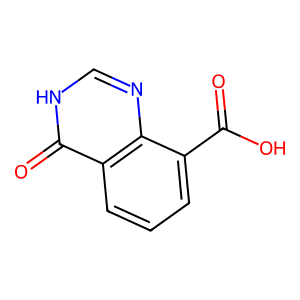 Cas:19181-77-2


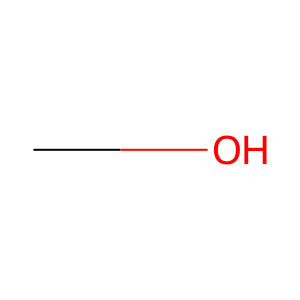 Cas:67-56-1
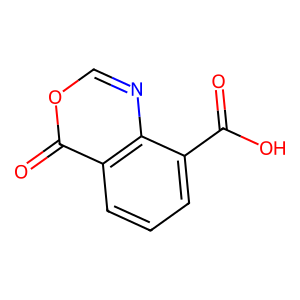 Cas:1379546-43-6