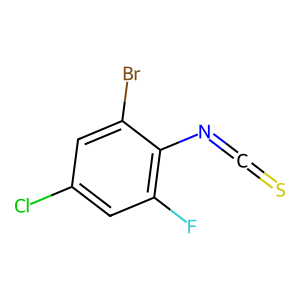
2-Bromo-4-chloro-6-fluorophenyl isothiocyanate
CAS No.:
1000577-50-3
M. Wt:
266.518
M. Fa:
C7H2BrClFNS
InChI Key:
BVGUPECNNRDPLU-UHFFFAOYSA-N
Names and Identifiers of 1000577-50-3
CAS Number |
1000577-50-3 |
|---|---|
MDL Number |
MFCD09878105 |
IUPAC Name |
1-bromo-5-chloro-3-fluoro-2-isothiocyanatobenzene |
InChI |
InChI=1S/C7H2BrClFNS/c8-5-1-4(9)2-6(10)7(5)11-3-12/h1-2H |
InChIKey |
BVGUPECNNRDPLU-UHFFFAOYSA-N |
Canonical SMILES |
C1=C(C=C(C(=C1F)N=C=S)Br)Cl |
UNSPSC Code |
12352100 |
Physical and chemical properties of 1000577-50-3
Boiling Point |
300.5±42.0 °C at 760 mmHg |
|---|---|
Density |
1.7±0.1 g/cm3 |
Exact Mass |
264.876373 |
Flash Point |
135.6±27.9 °C |
Index of Refraction |
1.624 |
LogP |
4.13 |
Molecular Formula |
C7H2BrClFNS |
Molecular Weight |
266.518 |
Vapour Pressure |
0.0±0.6 mmHg at 25°C |
Safety Information of 1000577-50-3

Applications of 1000577-50-3
2-Bromo-4-chloro-6-fluorophenyl isothiocyanate finds applications in various fields:
- Biochemical Research: It serves as a reagent for labeling proteins and studying protein interactions.
- Pharmaceutical Development: Its potential cytotoxicity against cancer cells makes it a candidate for drug development.
- Agricultural Chemistry: Similar compounds are often investigated for their pesticidal properties.
Interaction Studies of 1000577-50-3
Research on 2-bromo-4-chloro-6-fluorophenyl isothiocyanate has focused on its interactions with biological molecules:
- Protein Binding Studies: Investigations into how this compound modifies specific amino acids in proteins provide insights into its mechanism of action.
- Cellular Uptake: Studies examining how this compound enters cells can help understand its bioavailability and efficacy as a therapeutic agent.
Biological Activity of 1000577-50-3
2-Bromo-4-chloro-6-fluorophenyl isothiocyanate exhibits significant biological activity, particularly in the following areas:
- Antimicrobial Properties: Compounds containing isothiocyanate groups are known for their antimicrobial effects against bacteria and fungi.
- Cytotoxicity: This compound has shown potential cytotoxic effects on various cancer cell lines, making it a candidate for further research in cancer therapy.
- Protein Modification: The isothiocyanate group can selectively modify cysteine residues in proteins, which is useful for studying protein function and interactions.