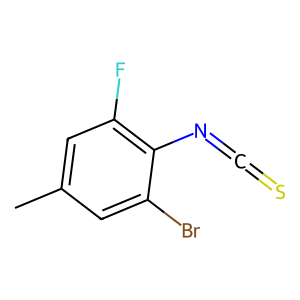
1-bromo-3-fluoro-2-isothiocyanato-5-methylbenzene
CAS No.:
1000576-04-4
M. Wt:
246.099
M. Fa:
C8H5BrFNS
InChI Key:
JDJUNXHXNCSGLN-UHFFFAOYSA-N
Appearance:
Solid
Names and Identifiers of 1000576-04-4
CAS Number |
1000576-04-4 |
|---|---|
MDL Number |
MFCD09800757 |
IUPAC Name |
1-bromo-3-fluoro-2-isothiocyanato-5-methylbenzene |
InChI |
InChI=1S/C8H5BrFNS/c1-5-2-6(9)8(11-4-12)7(10)3-5/h2-3H,1H3 |
InChIKey |
JDJUNXHXNCSGLN-UHFFFAOYSA-N |
Canonical SMILES |
CC1=CC(F)=C(N=C=S)C(Br)=C1 |
UNSPSC Code |
12352100 |
Physical and chemical properties of 1000576-04-4
Boiling Point |
305.4±42.0 °C at 760 mmHg |
|---|---|
Density |
1.5±0.1 g/cm3 |
Exact Mass |
244.931000 |
Flash Point |
138.5±27.9 °C |
Index of Refraction |
1.593 |
LogP |
4.41 |
Molecular Formula |
C8H5BrFNS |
Molecular Weight |
246.099 |
Vapour Pressure |
0.0±0.6 mmHg at 25°C |
Safety Information of 1000576-04-4

Applications of 1000576-04-4
2-Bromo-6-fluoro-4-methylphenylisothiocyanate finds applications in various fields:
- Pharmaceutical research: As a potential lead compound for developing anticancer agents or antimicrobial drugs.
- Chemical biology: Used as a probe to study enzyme activities or cellular mechanisms due to its reactive isothiocyanate group.
- Agricultural chemistry: Potentially utilized in developing pesticides or herbicides due to its biological activity against pests.
Interaction Studies of 1000576-04-4
Interaction studies involving 2-Bromo-6-fluoro-4-methylphenylisothiocyanate often focus on its reactivity with biological macromolecules:
- Protein binding studies: Investigating how the compound interacts with proteins can provide insights into its mechanism of action as an inhibitor or activator of specific pathways.
- Metabolic studies: Understanding how this compound is metabolized in living organisms can help assess its pharmacokinetics and toxicity profiles.
Such studies are crucial for evaluating the therapeutic potential of this compound.
Biological Activity of 1000576-04-4
Isothiocyanates are known for their diverse biological activities. 2-Bromo-6-fluoro-4-methylphenylisothiocyanate exhibits potential:
- Anticancer properties: Like other isothiocyanates, it may inhibit cancer cell proliferation and induce apoptosis in various cancer cell lines.
- Antimicrobial activity: It has been shown to possess antimicrobial properties against certain bacterial strains.
- Enzyme inhibition: The compound may act as an inhibitor for specific enzymes involved in detoxification processes in cells.