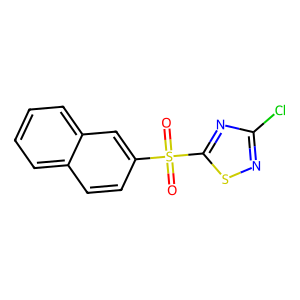
3-Chloro-5-(naphthalen-2-ylsulfonyl)-1,2,4-thiadiazole
CAS No.:
1000575-39-2
M. Wt:
310.779
M. Fa:
C12H7ClN2O2S2
InChI Key:
-
Names and Identifiers of 1000575-39-2
CAS Number |
1000575-39-2 |
|---|---|
IUPAC Name |
3-chloranyl-5-naphthalen-2-ylsulfonyl-1,2,4-thiadiazole |
Canonical SMILES |
C1=CC=C2C=C(C=CC2=C1)S(=O)(=O)C3=NC(=NS3)Cl |
Physical and chemical properties of 1000575-39-2
Boiling Point |
533.7±33.0 °C at 760 mmHg |
|---|---|
Density |
1.6±0.1 g/cm3 |
Exact Mass |
309.963745 |
Flash Point |
276.6±25.4 °C |
Index of Refraction |
1.690 |
LogP |
3.74 |
Molecular Formula |
C12H7ClN2O2S2 |
Molecular Weight |
310.779 |
Vapour Pressure |
0.0±1.4 mmHg at 25°C |
Applications of 1000575-39-2
The compound finds applications in various fields:
- Pharmaceutical Development: Due to its biological activity, it is explored as a lead compound for new drugs targeting infections and inflammation.
- Material Science: Its unique chemical structure allows for applications in the development of novel materials with specific electronic or optical properties.
- Agricultural Chemistry: Potential use as a pesticide or herbicide due to its antimicrobial properties.
Interaction Studies of 1000575-39-2
Interaction studies involving 3-Chloro-5-(naphthalen-2-ylsulfonyl)-1,2,4-thiadiazole focus on its binding affinity to biological targets:
- Molecular Docking Studies: These studies help predict how the compound interacts with enzymes or receptors involved in disease pathways.
- In Vivo Studies: Animal models are used to evaluate pharmacokinetics and pharmacodynamics, providing insight into its therapeutic potential.
Biological Activity of 1000575-39-2
3-Chloro-5-(naphthalen-2-ylsulfonyl)-1,2,4-thiadiazole has shown potential in various biological assays:
- Antimicrobial Activity: Compounds containing thiadiazole rings have been reported to exhibit antimicrobial properties against a range of pathogens.
- Anti-inflammatory Effects: Some derivatives have demonstrated significant anti-inflammatory activity in vitro and in vivo.
- Anticancer Properties: Research indicates that thiadiazole derivatives can inhibit tumor growth and induce apoptosis in cancer cell lines.