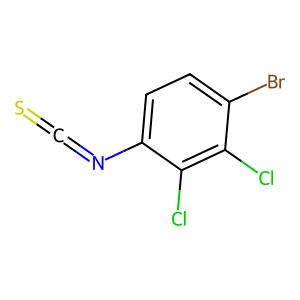
1-bromo-2,3-dichloro-4-isothiocyanatobenzene
Names and Identifiers of 1000574-11-7
CAS Number |
1000574-11-7 |
|---|---|
MDL Number |
MFCD09878190 |
IUPAC Name |
1-bromo-2,3-dichloro-4-isothiocyanatobenzene |
InChI |
InChI=1S/C7H2BrCl2NS/c8-4-1-2-5(11-3-12)7(10)6(4)9/h1-2H |
InChIKey |
WBGAXNJGLJECIJ-UHFFFAOYSA-N |
Canonical SMILES |
S=C=NC1=CC=C(Br)C(Cl)=C1Cl |
UNSPSC Code |
12352100 |
Physical and chemical properties of 1000574-11-7
Boiling Point |
364.3±42.0 °C at 760 mmHg |
|---|---|
Density |
1.8±0.1 g/cm3 |
Exact Mass |
280.846832 |
Flash Point |
174.1±27.9 °C |
Index of Refraction |
1.658 |
LogP |
5.02 |
Melting Point |
82 to 86°C |
Molecular Formula |
C7H2BrCl2NS |
Molecular Weight |
282.973 |
Vapour Pressure |
0.0±0.8 mmHg at 25°C |
Safety Information of 1000574-11-7

Applications of 1000574-11-7
4-Bromo-2,3-dichlorophenyl isothiocyanate finds applications in various fields:
- Proteomics: Used for protein labeling and modification studies.
- Pharmaceutical Research: Investigated for potential therapeutic effects against cancer and microbial infections.
- Chemical Biology: Employed in studies involving cellular signaling pathways and enzyme activity modulation.
Interaction Studies of 1000574-11-7
Research has indicated that 4-bromo-2,3-dichlorophenyl isothiocyanate interacts with various biomolecules through covalent bonding mechanisms. Studies have focused on its interactions with proteins containing nucleophilic residues such as cysteine and lysine. These interactions can lead to changes in protein function and stability, providing insights into its mechanism of action in biological systems.
Biological Activity of 1000574-11-7
4-Bromo-2,3-dichlorophenyl isothiocyanate exhibits significant biological activity. It has been studied for its potential anti-cancer properties, as it can induce apoptosis in certain cancer cell lines. Additionally, it has shown antimicrobial activity against various pathogens. The compound's ability to modify proteins can also influence cellular signaling pathways, making it a useful tool in biological research.