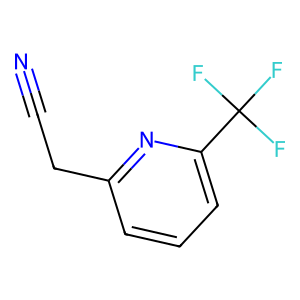
2-(6-(Trifluoromethyl)pyridin-2-yl)acetonitrile
CAS No.:
1000564-90-8
M. Wt:
186.13400
M. Fa:
C8H5F3N2
InChI Key:
GGFKLGNJHDHBMS-UHFFFAOYSA-N
Names and Identifiers of 1000564-90-8
CAS Number |
1000564-90-8 |
|---|---|
MDL Number |
MFCD09923756 |
IUPAC Name |
2-[6-(trifluoromethyl)pyridin-2-yl]acetonitrile |
InChI |
InChI=1S/C8H5F3N2/c9-8(10,11)7-3-1-2-6(13-7)4-5-12/h1-3H,4H2 |
InChIKey |
GGFKLGNJHDHBMS-UHFFFAOYSA-N |
Canonical SMILES |
C1=CC(=NC(=C1)C(F)(F)F)CC#N |
UNSPSC Code |
12352100 |
Physical and chemical properties of 1000564-90-8
Exact Mass |
186.04000 |
|---|---|
H Bond Acceptors |
2 |
H Bond Donors |
0 |
LogP |
2.16648 |
Molecular Formula |
C8H5F3N2 |
Molecular Weight |
186.13400 |
PSA |
36.68000 |
Storage condition |
2-8°C |
Safety Information of 1000564-90-8

Applications of 1000564-90-8
The unique properties of 2-(6-(Trifluoromethyl)pyridin-2-yl)acetonitrile make it suitable for various applications:
- Pharmaceutical Development: Its structure is utilized as a building block for drug candidates targeting various diseases.
- Agrochemical Formulations: It serves as an active ingredient in pesticides and herbicides due to its enhanced bioactivity.
- Material Science: The compound may find applications in developing advanced materials with specific electronic properties.
Interaction Studies of 1000564-90-8
Studies on the interactions of 2-(6-(Trifluoromethyl)pyridin-2-yl)acetonitrile with biological targets reveal its potential mechanisms of action:
- Receptor Binding Studies: Research indicates that this compound may interact with specific receptors involved in cellular signaling pathways.
- Enzyme Inhibition: It has been shown to inhibit certain enzymes relevant to disease processes, which could lead to therapeutic applications.
Biological Activity of 1000564-90-8
Compounds containing the trifluoromethylpyridine structure are known for their diverse biological activities. Research indicates that 2-(6-(Trifluoromethyl)pyridin-2-yl)acetonitrile exhibits:
- Antimicrobial Properties: Similar compounds have shown efficacy against various bacterial strains.
- Insecticidal Activity: The trifluoromethyl group enhances the potency of agrochemicals derived from this scaffold, making them effective in pest control.
- Potential Anticancer Activity: Some derivatives have been investigated for their ability to inhibit cancer cell proliferation.