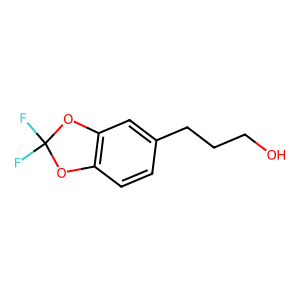
3-(2,2-difluoro-1,3-benzodioxol-5-yl)propan-1-ol
Names and Identifiers of 1000543-47-4
CAS Number |
1000543-47-4 |
|---|---|
IUPAC Name |
3-[2,2-bis(fluoranyl)-1,3-benzodioxol-5-yl]propan-1-ol |
Canonical SMILES |
C1=CC2=C(C=C1CCCO)OC(O2)(F)F |
Physical and chemical properties of 1000543-47-4
Exact Mass |
216.06000 |
|---|---|
LogP |
1.93300 |
Molecular Formula |
C10H10F2O3 |
Molecular Weight |
216.18100 |
PSA |
38.69000 |
Applications of 1000543-47-4
2,2-Difluoro-5-(3-hydroxypropyl)-1,3-benzodioxole has several potential applications:
- Pharmaceutical Development: Due to its interaction with Tau protein, it may serve as a lead compound in developing treatments for neurodegenerative diseases.
- Chemical Research: Its unique structure allows it to be used as a building block for synthesizing other complex organic molecules.
- Catalysis: It may also find applications in asymmetric synthesis as a ligand in catalytic processes.
Interaction Studies of 1000543-47-4
Interaction studies have shown that 2,2-Difluoro-5-(3-hydroxypropyl)-1,3-benzodioxole binds specifically to the Tau protein. This binding is crucial for its biological activity and therapeutic potential. Investigations into its binding affinity and kinetics are ongoing to better understand its mechanism of action and optimize its efficacy as a therapeutic agent.
Biological Activity of 1000543-47-4
Research indicates that 2,2-Difluoro-5-(3-hydroxypropyl)-1,3-benzodioxole interacts with the Tau protein, which is implicated in neurodegenerative diseases such as Alzheimer's. The compound appears to promote the degradation of Tau protein through ubiquitination pathways. This mechanism may contribute to its potential therapeutic effects in treating tauopathies by reducing Tau aggregation and toxicity in neuronal cells.