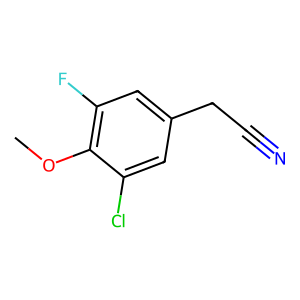
3-Chloro-5-fluoro-4-Methoxyphenylacetonitrile, 97%
CAS No.:
1000540-93-1
M. Wt:
199.61
M. Fa:
C9H7ClFNO
InChI Key:
FQNCSDFMBYXPBZ-UHFFFAOYSA-N
Names and Identifiers of 1000540-93-1
CAS Number |
1000540-93-1 |
|---|---|
MDL Number |
MFCD09832263 |
IUPAC Name |
2-(3-chloro-5-fluoro-4-methoxyphenyl)acetonitrile |
InChI |
InChI=1S/C9H7ClFNO/c1-13-9-7(10)4-6(2-3-12)5-8(9)11/h4-5H,2H2,1H3 |
InChIKey |
FQNCSDFMBYXPBZ-UHFFFAOYSA-N |
Canonical SMILES |
COC1=C(F)C=C(CC#N)C=C1Cl |
UNSPSC Code |
12352100 |
Physical and chemical properties of 1000540-93-1
Molecular Formula |
C9H7ClFNO |
|---|---|
Molecular Weight |
199.61 |
Safety Information of 1000540-93-1

Applications of 1000540-93-1
The primary applications of 2-(3-Chloro-5-fluoro-4-methoxyphenyl)acetonitrile include:
- Pharmaceutical Development: As a potential lead compound in drug discovery, particularly in oncology and infectious disease treatment.
- Agricultural Chemicals: Its properties may lend themselves to use as a pesticide or herbicide.
- Chemical Intermediates: Useful in synthesizing more complex organic molecules for various industrial applications.
Interaction Studies of 1000540-93-1
Interaction studies focus on how 2-(3-Chloro-5-fluoro-4-methoxyphenyl)acetonitrile interacts with biological systems. Preliminary studies suggest:
- Protein Binding Affinity: Understanding how the compound binds to target proteins can provide insights into its efficacy and safety profile.
- Metabolic Pathways: Investigating how the compound is metabolized in vivo can aid in predicting its pharmacokinetics and potential toxicity.
These studies are crucial for evaluating the compound's suitability for therapeutic use.
Biological Activity of 1000540-93-1
2-(3-Chloro-5-fluoro-4-methoxyphenyl)acetonitrile exhibits various biological activities that make it of interest in medicinal chemistry. Studies indicate that compounds with similar structures often show:
- Antimicrobial Properties: Potential effectiveness against bacterial and fungal strains.
- Anticancer Activity: Some derivatives have demonstrated cytotoxic effects on cancer cell lines.
- Anti-inflammatory Effects: The compound may influence inflammatory pathways, making it a candidate for treating inflammatory diseases.
Further research is needed to fully elucidate its mechanism of action and therapeutic potential.