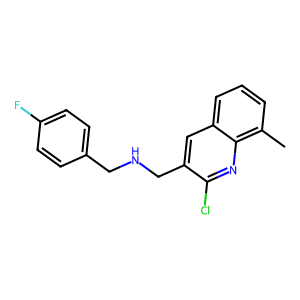
(2-Chloro-8-methyl-quinolin-3-ylmethyl)-(4-fluoro-benzyl)-amine
CAS No.:
1000348-02-6
M. Wt:
314.8
M. Fa:
C18H16ClFN2
InChI Key:
-
Names and Identifiers of 1000348-02-6
CAS Number |
1000348-02-6 |
|---|---|
IUPAC Name |
N-[(2-chloranyl-8-methyl-quinolin-3-yl)methyl]-1-(4-fluorophenyl)methanamine |
Canonical SMILES |
CC1=C2C(=CC=C1)C=C(C(=N2)Cl)CNCC3=CC=C(C=C3)F |
Physical and chemical properties of 1000348-02-6
Molecular Formula |
C18H16ClFN2 |
|---|---|
Molecular Weight |
314.8 |
Applications of 1000348-02-6
The potential applications of (2-Chloro-8-methyl-quinolin-3-ylmethyl)-(4-fluoro-benzyl)-amine span various fields:
- Pharmaceuticals: Due to its anticipated biological activity, it could serve as a lead compound in drug development for infectious diseases or cancer treatment.
- Research Tools: This compound may be used in biochemical studies to explore enzyme interactions or cellular signaling pathways.
- Chemical Probes: It could function as a molecular probe in studies aimed at understanding specific biological processes.
Interaction Studies of 1000348-02-6
Interaction studies are crucial for understanding how (2-Chloro-8-methyl-quinolin-3-ylmethyl)-(4-fluoro-benzyl)-amine interacts with biological targets. Techniques such as:
- Molecular Docking: This computational method predicts how the compound binds to target proteins, providing insights into its mechanism of action.
- High-throughput Screening: This approach allows for the rapid assessment of the compound's effects on various biological systems, identifying potential therapeutic uses.
Such studies help elucidate the pharmacodynamics and pharmacokinetics of the compound.
Biological Activity of 1000348-02-6
- Antimicrobial Activity: Quinoline derivatives are frequently investigated for their ability to inhibit bacterial growth and combat infections.
- Anticancer Properties: Many quinoline-based compounds have shown promise in cancer therapy by inducing apoptosis in tumor cells.
- Enzyme Inhibition: The compound may act as an inhibitor of specific enzymes involved in metabolic pathways, leading to therapeutic effects against various diseases.
In silico predictions using tools like PASS (Prediction of Activity Spectra for Substances) can provide insights into potential biological activities based on structural characteristics.