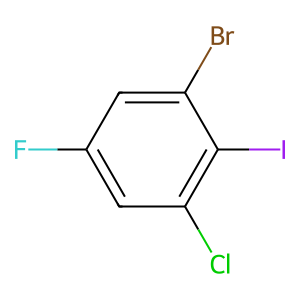
1-Bromo-3-chloro-5-fluoro-2-iodobenzene
CAS No.:
1000577-66-1
M. Wt:
335.34000
M. Fa:
C6H2BrClFI
InChI Key:
NZPDPJBTIWKLDN-UHFFFAOYSA-N
Names and Identifiers of 1-Bromo-3-chloro-5-fluoro-2-iodobenzene
CAS Number |
1000577-66-1 |
|---|---|
MDL Number |
MFCD09878109 |
IUPAC Name |
1-bromo-3-chloro-5-fluoro-2-iodobenzene |
InChI |
InChI=1S/C6H2BrClFI/c7-4-1-3(9)2-5(8)6(4)10/h1-2H |
InChIKey |
NZPDPJBTIWKLDN-UHFFFAOYSA-N |
Canonical SMILES |
C1=C(C=C(C(=C1Cl)I)Br)F |
UNSPSC Code |
12352100 |
Physical and chemical properties of 1-Bromo-3-chloro-5-fluoro-2-iodobenzene
Exact Mass |
333.80600 |
|---|---|
LogP |
3.84620 |
Molecular Formula |
C6H2BrClFI |
Molecular Weight |
335.34000 |
Storage condition |
Sealed in dry,Room Temperature |
Safety Information of 1-Bromo-3-chloro-5-fluoro-2-iodobenzene

Applications of 1-Bromo-3-chloro-5-fluoro-2-iodobenzene
1-Bromo-3-chloro-5-fluoro-2-iodobenzene finds applications in various domains:
- Pharmaceuticals: Used as an intermediate in the synthesis of biologically active compounds.
- Material Science: Serves as a building block for polymers and other materials with specific properties.
- Dyes and Pigments: Employed in the production of colorants due to its stable structure and reactivity.
Interaction Studies of 1-Bromo-3-chloro-5-fluoro-2-iodobenzene
Interaction studies involving 1-bromo-3-chloro-5-fluoro-2-iodobenzene focus on its behavior in biological systems and its interactions with other molecules. These studies often assess:
- Binding Affinity: How well this compound binds to various biological targets, including enzymes and receptors.
- Synergistic Effects: The impact of combining this compound with other drugs or agents to enhance therapeutic efficacy.
Such studies are crucial for understanding its potential therapeutic roles and optimizing its use in drug development.
Biological Activity of 1-Bromo-3-chloro-5-fluoro-2-iodobenzene
Research indicates that 1-bromo-3-chloro-5-fluoro-2-iodobenzene exhibits notable biological activities. Compounds with similar structures have been studied for their potential as:
- Anticancer Agents: Certain derivatives have shown promise in inhibiting tumor growth through various mechanisms.
- Antimicrobial Agents: The presence of multiple halogens often enhances the antimicrobial properties of such compounds, making them candidates for developing new antibiotics.
- Enzyme Inhibitors: Some studies suggest that this compound can inhibit specific enzymes, which could be useful in therapeutic applications.